Building Cobain Presence in Aberdeen

http://kbkw.com/modules/news/article.php?storyid=6234

Another element added to the mix in Aberdeen. Nothing more added on this front yet, I’ll be curious to see what this is. Nice to see a guy who valued himself as more than just a musician, as a true artist, being appreciated by such a span of local artists.

Might have said this the other day, I remember a copy of MAD Magazine back in 1994 saying “teach more singers to mumble like Kurt Cobain so there’ll be less incomprehensible lyrics to memorize.” It’s a neat quip – still makes me smile…And of course there’s far more to say.

The stereotype of the guy who mumbles then screams underestimates the amount of work Cobain put into exercising his vocal abilities – all the unusual touches. The early period prior to fame in particular is loaded with different voicings and attempts to take his vocals to unusual places. Side B of Incesticide was already a showcase for a range of approaches, something like Blandest is an interesting experiment, Fecal Matter goes gruffly punk but still sees him speaking in other voices and tones, the acoustic tracks like Clean Up Before She Comes/Don’t Want it All are another angle, the way few songs even go a whole verse without a shift in pitch or peak…It’s a beautiful thing that he pulled off Do Re Mi right at the end when I’ll admit to feeling the startling vocal changes had gradually fallen for quite some time. In a way what makes Do Re Mi a definitive Cobain performance is that he does something that people perhaps wouldn’t expect him to do when really, if they were reacting to his songs rather than the perception of his songs, the unexpected vocal tweak or twist is precisely what was most crucial and most representative of him as a voice.

Friday addition: a little more on the artist’s intentions for the mural plus kinda fun reading local news for the Aberdeen/Hoquiam/Gray’s Harbor area:
http://kxro.wordpress.com/2013/11/

Something in the Way in my Opinion – Plus Ukulele Teen Spirit…

To be very fair, this is far more listenable than one would expect – instrumentally the change in tone is pretty intriguing, the bridge into the chorus benefits from the clock-like approach of the multiple ukuleles and the harmonised vocals….Anyways, thought it’d lend something different to your day. Enjoy.

In other thoughts of the day, I find the process of creation intriguing. Inspiration isn’t ‘magic’, it isn’t necessarily so beyond exploration or regular human experience that threads of thinking can’t be identified. In the case of Mr. Cobain, there’s been a debate over on LiveNirvana the past couple days about a YouTube clip called ‘Excuse’ (http://www.youtube.com/watch?v=q45a0m0MZ_U), go read the thread, it’s entertaining and I don’t wish to repeat it.

What it’s reminded me of though is the level of ambition Cobain exhibited with regard to his vocal performances. Focusing purely on his acoustic efforts, there’s significant variety in the performances ranging from the wonderful double-tracking effect on Clean Up Before She Comes, to the gothic vocalising on Don’t Want it All, the narcotised story-telling/scene description on Polly accompanying the background effects and thudding ‘suitcase’ drums, the way each line peaks on Opinion prior to the humming chorus lines, the solemnity giving way to the beautiful chorus of Something in the Way…His willingness to test his own voice, to rarely settle for monotony across an entire song.

It isn’t a huge revelation but one element I’ve been musing on recently is the visible connections between songs performed at certain times of his career. Essentially if an idea or approach was on his mind there tended to be more than one song in a certain mode or utilising a certain style or technique. At its most direct there’s Cobain’s admission that Dumb was written as an extrapolation from Polly, the punchy pop of Been a Son and Stain – or the lyrical unities between certain songs like Been a Son, Stain and Even in his Youth all of which arose around the same era.

Which brings me to the slimmest glimmer of a connection. I simply wondered whether I should think of the humming in Opinion and Something in the Way, two songs that arose in the same spell of song-writing in summer-autumn 1990, as two examples of a single brief vocal experiment. All i’d be suggesting is that these two songs happened to fit a particular mode he worked with briefly in which ending the chorus line, the song’s title line, by humming was something he was toying with. It also impresses me that he would put so much into such a tiny element of a song – the low/high humming on Opinion or the double-tracked harmonies that conclude Something in the Way…Cobain may unfortunately have come to bear the mantle of the ‘slacker’ generation but there was nothing slack at all about how much work he clearly put into testing and experimenting with even the smallest things he could do with his voice.

Nirvana In Utero Deluxe Editions at Two Months Distance

Wondered how everyone was feeling about their Nirvana In Utero deluxe and super-deluxe editions now there’s been time for it to soak in?

In the run-up I was pretty contented – some material I’d never heard, a potentially intriguing remix job, the Litt/Albini originals of a few pieces, the one surprise instrumental from a rehearsal, the bonus footage pieces. I’m very much on the glass half-full side of things, especially given I know it was feeding a hole that can never be filled meaning that anything that emerges was, and is, welcomed and appreciated.

At this point…Well, I’d still rate myself satisfied – the remastering was perfectly decent and I see no great reasons for anyone to complain about the slight ‘pumping up’ of the original album, the remix had a few points of intrigue, the bonuses made sense and Live and Loud is still a quality performance – love the long outro…More of this kinda chaos please!

But. On the other hand, I admit the randomness of including certain instrumentals and not others, of including certain early takes and not others…That definitely grates on me. When all the additional material is filler for fanatics hearing that someone somewhere has decided that certain material is ‘even more filler than other filler’ and that I’d definitely not want to hear it…It’s just irksome. I’m trying my best to think of it as the equivalent of the hierarchy of eBay, then second hand and charity shops, then finally bric-a-brac stores and carboot sales – that there are differing levels among pieces someone gets rid of but still…Unless an outtake is unavailable or genuinely wrecked I’ve no idea why one outtake should be deemed of any greater value than another.

Also, the 2013 remix did disappoint – I was hoping to hear far more wrenching changes to a greater number of songs. Instead, a few peaks do stand out but too few to fundamentally alter my listening experience or to distinguish the remix greatly from the original album. I’ve tried it with headphones, I’ve tried it with the original album playing alongside…Ultimately I think one problem may be that an exercise like this being in the hands of music producers/engineers fails to recognise the difference between the aural depth heard by those experts versus what might be distinguishable to an untrained individual who can’t isolate the audio tracks and doesn’t have such sensitive hearing. I was hoping for more. I’d have been more than happy, as an experiment, to hear them drop out backing, chop vocals, restructure songs…Isn’t it funny? I’m happy to consider sacrilege so long as it made for something fresh!

Ultimately there’s a touch of realisation to the whole experience, for me. The reason that there are not many deep cuts or intriguing diversions on the release is simply because that absence is a realistic portrait of what was going on in terms of Nirvana in the 1992-1993 period. Nirvana entered the studio in October 1992 and did barely one day’s work, they managed at most two days playing together as a band in January 1993, then in February they hammered out the album and all additional takes and so forth in, at most, a single week. This wasn’t a band taking time to evolve, develop or experiment with their songs – they were walking in, hammering out takes, then heading home where Cobain might work on something to order the band to do next time they got together. The compilers of the In Utero twentieth anniversary releases had the unenviable task of fleshing out a mildly depressing period of time for Nirvana and I feel they did so subtly (for example, the pieces in the Super-Deluxe book that emphasise the business and product aspects of an album) and accurately (in terms of the overall paucity of revelations or substantially different material.)

It does make me wonder though, whether Courtney Love has plans for the remaining tapes of Cobain demos given there have now been several occasions between 2009 and 2013 for further use to be made of whatever remains in that archive. On the one hand it makes me think that the rift opened way back in the early 2000s has never even reached the point at which she’s involved in any of the anniversary releases. On the other, it still lends me hope that there’s more to be made of material from her side of things – material that isn’t sitting with the label, or with Krist and Dave, or in the bands of Nirvana’s various producers.

That’s what I feel fans really have to look forward to; more Cobain material, a lot less Nirvana releases of real note.

The Camera Lies: Cobain in Photos

I’ve said it before, I’m not a big fan of genuflecting over endless photos of Kurt Cobain and Nirvana.
It isn’t that I don’t appreciate the work that goes into surfacing shots of rare shows and moments in the life of this band. The kinds of photos I’m referring to are the close ups and front-on shots of Cobain’s face – they leave me cold because they serve a fundamental lie.

The purpose of a photo is to bring an onlooker closer to a moment that has past, whether a piece of their own history or someone else’s. The belief, with photos of Kurt Cobain, seems to be that this is about communion with the soul of the man himself – a way of growing closer to an understanding of him and a sympathy with his experience of the world. I would argue most of it is, instead, about projection by the onlooker and/or photographer and nothing at all to do with Cobain.

The Mona Lisa is a prime example – what was the woman thinking? The answer is that, actually, the image captures nothing. It’s impossible to verify if the famous smile was actually present (think about it, over the period of time the artist took to capture the image did the model truly maintain a single uniform facial expression for ten minutes, thirty minutes, hours on end?) or whether it was simply what the artist wished to portray or represent to us – his invention entirely and one that should make us ask not, “what was the woman thinking?” but “what was the artist thinking?” Likewise, even if we assumed that it was a true representation of the physical expression of the model it brings us no closer to verifying her actual emotional state; most people have a ‘photo face’ that they put on when a camera is pointed at them – what we may be seeing is the model’s false face adopted because of the present of an artist’s brush. And, again, even if we accepted that this face was indeed a direct translation of what she was feeling at that moment in time its a tragic voiding of the complexity of a human being to reduce them down to a single face at a single moment – when that model left the room we don’t know if she looked relieved, if she laughed to see herself in paint, or if she cried over a distraction we can’t see because all we have to go on is what the artist commissioned, paid for and chose to represent. We’re not seeing truth, we’re seeing a selected and mediated (un)reality.

The same goes for photos of Kurt Cobain. I read one photographer stating that one of his famous shots of Cobain staring wide-eyed into the camera, in his opinion, captured a moment of nakedness, vulnerability and honesty…Crap. Studying the sea of Cobain photos what is clearest to me is that this was a man extremely uncomfortable to be brought to a location specifically for people to commit an act upon that had no purpose other than to let people gaze at his face. His facial expression isn’t unhappy, it isn’t sad or soulful – it’s a deliberately blank canvas, it’s a tease even, a case of him saying “look into my eyes, believe what you like, I’m telling you nothing.”

This matches with his distrust of the press and, indeed, most of the trappings of his superstar status – he didn’t enjoy people prying into his life so I believe it’s equally unbelievable to think that a man who famously lied to and/or concealed things from interviewers would simultaneously reveal himself utterly to a cameraman. It leads me to recall the moments on stage when he pursued the TV cameras and forced them to cut out because he waved his penis at them, or the moments when he spat on the lens, or the decision in the Come as You Are video to conceal faces.

Look again at the weight of Cobain images out there and note how often it’s obvious that he’s faking or forcing a smile – the most likely explanation for those moments is that he’s been asked to smile by the cameraman, same as one would be asked at a wedding or other occasion. I’m definitely personally projecting here – I’m constantly told “smile” in photos and I simply can’t react because it’s a demand for a false and fake reaction. What I say is always the same, “talk to me or say something funny – I’ll smile immediately”, the real human contact is needed in order to capture a natural photo, I can’t pretend. In the case of Cobain, there’s the photo of him holding up a can of spam to the camera – caught acting, his smile is natural because he’s not trying to smile, his own focus and desire is to show the can. Similarly, the photo of him sat on the floor exhausted with a hand to his head and apparently crying seems real but was something he got over swiftly. All the most popular Cobain pictures (https://nirvana-legacy.com/2012/11/11/the-most-popular-kurt-cobain-photos/), the iconic Rolling Stone shots (including the one that graces With the Lights Out), show nothing, say nothing, give no insight other than a refusal to engage with the camera. It’s a dead face and what he’s sharing with ‘us’, the viewers, is no emotion at all thus voiding the supposed purpose of all these pictures floating around the world and gracing magazines, Facebook pages, Twitter feeds, Tumblr, whatever.

The threefold purpose of photos, in my opinion, is to verify an occurence, to be appreciated as art in its own right and/or share an experience. The former case is served by photos such as those of Cobain’s trip to hospital in Rome in March 1994, confirming something occured and illustrating its telling and retelling – the picture is nothing on its own without the story. The artistry of the photographer’s art, to me, is served by shots like the frenetic photos from the International Motor Sports Garage that capture the blurred reality of bodies in motion – the Bleach cover likewise is a wonderful combination of anonymity and recognisability – it’s a great identity shot and Sub Pop aligned brand image. The final point is served by the concert shots of Nirvana on stage and, of course, is most meaningful for those who were at a particular occasion – a personal memory. For those who weren’t ever physically present it hints and tantalises at the visual component of the live experience; video may more accurately capture a dynamic occasion but it erases a lot of the imaginative potential of listening to a recording and studying photos then filling the gap with what the mind conjures. People underestimate how much the photographic image is a physical spur to fantasy – frankly I don’t think we like to admit how much of day to day life is about reacting to imagined and potential realities and futures.

It’s why I find ‘selfies’ so tedious. They’re the equivalent of the grating barking of a dog, an endless declaration of “I’m here!” “I’m here!” “I am here!” Humans with so little to do they’re reduced to endless repetition of content-less presence; mannequins. Fake people.

BlkVampires, Nirvana, the HarlequinX and a Riot on the Dance Floor

new bv flier poster 2011 small size

A few months ago I made a passing comment on the racial divide around the alternative rock scene and one respondent, quite reasonably, took issue with the idea that Nirvana were in anyway racist. Less reasonably, that wasn’t what I was commenting on; the undeniable reality was that there was a significant colour bar, an unintentional one, that meant the world of alternative rock in the Eighties and Nineties was an almost entirely uniform race phenomenon. Decades of ‘white flight’ leading up to and into the Eighties built upon the segregation arising from class (which substantially mirrors the racial lines in society) to create large numbers of almost all white suburbs and smaller settlements. Music doesn’t float free of society and increasingly came to be a de-facto reflection of what was occuring. This doesn’t mean that audiences were in anyway racist or that musicians were either – they simply played what they wished with the friends around them. What it meant was a minimal representation from the non-white community in punk/alternative rock.

http://www.tabletmag.com/scroll/150886/a-horror-story-set-in-crown-heights

http://blkvampire.homestead.com/Book-Release.html

Substantial coverage is always given to the Bad Brains (Fishbone and Living Color have been pointed out to me also) not just because they were superb (they were) but also because they were an exception within the scene. Reasonably enough they emerged from the more mixed environment of New York City. That simply couldn’t be reproduced in State of Washington which, even in 2010, was 77.3% ethnically white, 7.2% Asian, 5.1% ‘other’, 4.7% mixed race, 3.6% African American, 1.5% native American and 0.6% Pacific islander. The result in the Seattle scene is pretty visible – Soundgarden possessed Kim Thayil (Indian extraction) also Hiro Yamamoto (Asian) and…Oh. That’s pretty well it.

The music of the alternative revolution fairly closely reflected the boundaries established with the kind of fusion artists like Jimi Hendrix had attempted more or less erased, Led Zeppelin’s genre experiments forgotten in favour of their pure rock muscle and the more funk-orientated artists of the late Eighties and early Nineties more likely to emerge from LA (Red Hot Chilli Peppers being the prime example) than from the regional punk scenes – the Minutemen’s Mike Watt, a further exception.

rhcp

This is in no way a criticism of any of the music of the era – there’s no judgment involved. It is, however, a background to Nirvana and their emergence and observing the bands with whom they played minority-representation is little and far between even while the female presence is higher than the mainstream rock star norm. The band’s music reflected a music culture that also reflected population demographics.

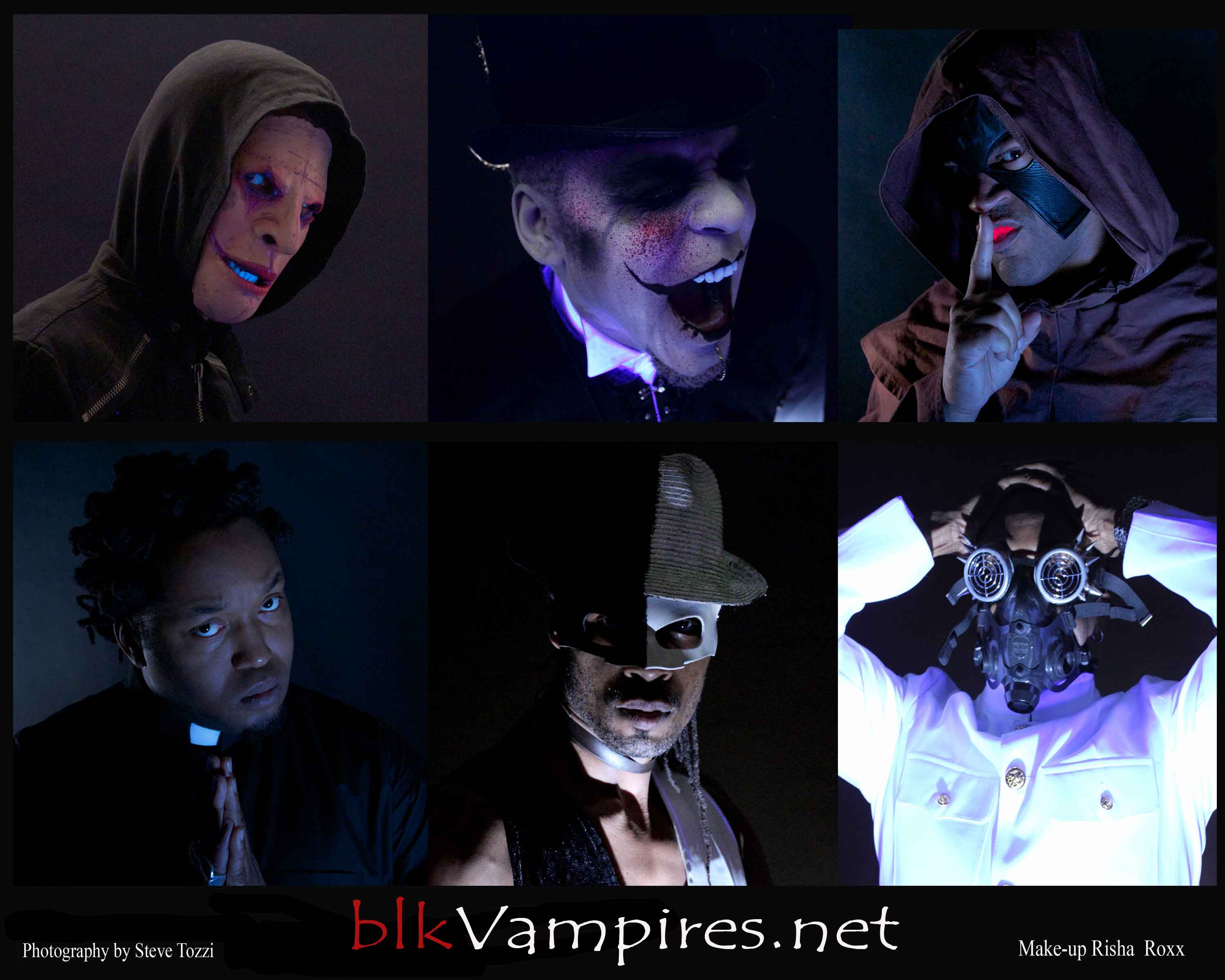
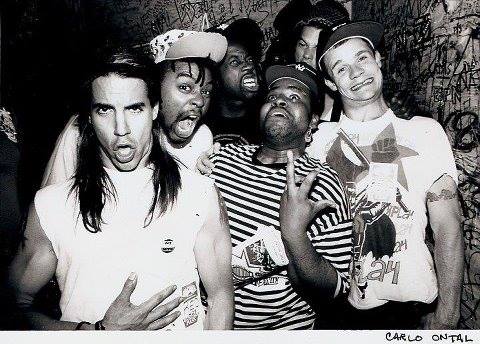
While a common cliche is the adoption of African American music styles by racially white artists all the way back to Elvis (and perhaps tragically best represented today by Miley Cyrus – *shudder*) there are far fewer cases of enthusiasm and respect running in the opposite direction. One exception was a band that crossed paths with Nirvana on two occasions in 1989 and 1990 – 24/7 Spyz. Recently I made contact with Mr. Forrest Thinner of the band who recalls what is an under-discussed aspect of the ‘alternative rock revolution’ and who clearly lived and breathed for that scene and the love of playing – still does. The photo above shows 24/7 Spyz goofing about with RHCP and in the meantime I’ll let Forrest speak about the scene he was a witness to and a part of…

“Alternative rock really came from the college circuit…and yes the scene was super white; Bad Brains/Fishbone & Living Colour stuck out like a light bulb – the white teenage males had a lot to get off there chest socially they needed answers and it seemed the music was a way to be heard! For 24-7 Spyz to exist in those times were an anomly we were ‘Bad Brains’ from da HOOD to see us in those times was like seeing Eminem now like how Em is respected by the black rap community well we were respected by the Skinheads/MetalHeads/SkaKids/Punks/Hip Hop/StreetThugs/etc…Bad Brains is the inventors of Hardcore music period but not PUNK! Brains are not like the Sex Pistols/the Ramones or the Exploited they invented a musical style called ‘HardCore’ also they mixed it with Reggae Music which we all know that you can smoke weed and get high at the same time while playing music like some LSD hippie days shit so H.R. became like Jim Morrison (:-)) Giving the Brains big ups is Tokenism with a sense of honor and respect for being the FIRST of their kind.”

His new band furthers the agenda to the extent of ‘white-ing up’ with the corpse paints more prevalent in Death Metal circuits or Marilyn Manson’s ilk. Again, there’s no novelty intent, it’s a genuine love of the musical form and style plus a musical openness and omnivorousness:

“My first decision to dive into music was when The Jackson 5 came out, Micheal was only two years older than me and i still remember trying to sing all the words to ‘I want you back’…that’s when i became hooked into music. Metal & Hardcore came when i went into the Army and my platoon mates started introducing me to Van Halen/Molly Hachett/38 Special/Iron Maiden etc….I really got into all of it Queen/Led Zepplin everything and everybody. I was already hip to PFUNK and James Brown plus ALL of the 70’s funk bands i played Alto Sax then Guitar then Bass and i write my songs on Bass till this very day….24-7 Spyz wasn’t my first musical endeavor as a teen i was in a couple of local bands (Supreme Funk/Knights and then i started 24-7 Spyz)…We were also friends with Fishbone so Murphy’s Law took us under their wing and brought us to the world of HardCore where we got expose to Bad Brains/Agnostic Front/Raw Deal/Cro-Mags/Dead Kennedy’s/Sick Of It All etc…And when the Hardcore world got a hold of us it was DONE sooo fast.”

This is a truly original path forged through the underground, a brave one given the punk rock circuits were running through states lacking the liberal mindset of the North-West. This went hand-in-hand with a respect and love for the music around them. Speaking about playing with Nirvana back in the day Forrest’s exuberant comment was “I never heard of them before that night so i didn’t know they songs or set list but some of the kids did i just remember the rawness and power of them and they were loud as hell. I was very surprised to see them on ‘David Letterman’ i thought to myself DAMN Alternative Music has got a face now…Thank God!” which has an embracement of what occured that is very foreign to the reaction of a lot of musicians in the scene who were more concerned with hiding the scene as if it was a private secret.

I think anyone who has read the ‘New Music, New Discoveries’ category of this blog might have noticed I get a bit awed by people just willing to do what they feel, create something, think of something expressively or spiritually and just make it happen in spite of profit or obstacles. Do for self. In the case of Forrest he’s moved on, moved up and in the form of BlkVampires is expanding into multiple spheres as a true artist not just a musician willing to kick genre boundaries in the same way Meat Puppets, Minutemen, Big Black, Butthole Surfers and (yes) Bad Brains did in the early-to-mid Eighties.

“What I’m doing now in 2014 is a triple threat (Music/Book/Film) with my band ‘blkVampires’ we are a New York City based band that plays ‘Hard Alternative Gothic Soul’ music kinda like Pantera meets Al Green w/a little bit of the Exorcist inside…A soulful version of Marilyn Manson. We’ve been around for 4 years building a following & buzz. I just finished my first supernatural horror fiction novel ‘the HarlequinX’ and there’s a music documentary film coming out called ‘Riot On The Dance Floor’ in 2014 that has 15 of the TOP Hard Alternative Punk Artist EVER!! and i have the honor to BE in this film! If i was to recommend a song that personified us i would ask you to listen to “Blkenstein” from the Devil’s Music EP and there are too many highlights for me to pick just one because we’re ALWAYS asked to do something good but i would say that we are the ONLY all black band that has ever been featured in Fangoria Magazine and they been around since the mid 70’s and in April 2014 our 3rd EP Tutankhanum X will be out along with our Film & Book.”

That’s a lot of action. Forrest and the BlkVampires, I salute you and thank you for allowing me to point to you and your past endeavours as an exceptional journey through the rising alternative rock scene of the Eighties and Nineties and on into the present.

http://www.blkvampires.net

blkVampires Poster

A Sighting of the Big Long Now

Bleach Tape - Cobains Writing

I’m fascinated by the song Big Long Now. Ignoring questions of good/bad (given those are personal opinions of no relevance to anyone other than oneself) and ignoring queries about the audio quality of the recording (given such factors are technological issues of neutral import and no relevance to whether a track is good/bad/indifferent), what interests me is its unique status. It’s the only original outtake from the Bleach sessions – the Chad version of Hairspray Queen simply being an unseen alternative to the January 1988 version. That singular status makes it intriguing to me. In the interview for the Dark Slivers book, Jack Endino stated that there were no additional takes of Big Long Now “one take, bam!” which means there’s that version on Incesticide, the rehearsal video on With the Lights Out…And that’s it. That fact that it’s the only song on the album-length releases during Cobain’s lifetime to not end up on a live bootleg, to never make it onto a live recording – it gives it an air of mystery.

In passing, while touring Tacoma, I was spending the afternoon with John Purkey and he pointed out that the song was featured on the demo tape Kurt Cobain personally handed to him – the raw tape of the Bleach sessions. I commented on how unique it is, that there are no live versions and no one knows when it was played…John casually replied “that’s not strictly true – I saw it twice…” And he remembers one of the venues too.

In the book I mentioned that Chad remembers playing the song – as does Jason Everman. Actually, heck, I don’t do this often but I’m going to quote my own work – the next two paragraphs are from Dark Slivers: Seeing Nirvana in the Shards of Incesticide –

Chad Channing was drummer from sometime following a May 21, 1988 show, until his last show with the band on May 17, 1990. Chad has claimed the song was played during his time with the band. It has also been claimed that it was a favorite of Jason Everman—Nirvana’s second guitarist from February to July 1989. Also, in Portland, Oregon on June 10, 1989 a fanatical fan requested the song. Krist Novoselic then replied “we don’t play that one anymore.” The phrasing suggests there was a time when they did. Likewise, the fact the fan asked the question implies the song was played given he was asking for a song that was less than six months old and unreleased at that point. Unless the individual concerned had attended a home rehearsal he must have seen it live.

Furthermore, the timing is right. From April-October 1988 only eleven songs are known from sixteen shows and between January-July 1989 only three full and three partial set-lists are known from twenty-seven shows. This is the biggest gap in the Nirvana records. Tightening the noose; three of five set-lists are known for October-December 1988 so it makes it unlikely the song was unveiled until 1989. Yet the song is declared long dead on June 10,1989 and absent from the complete set-list of the band’s only show in May. This makes it possible to say that if, as the witnesses indicate, Big Long Now was played live, we can surmise it happened during at least one of the ten shows that took place between January and April 1989.

SO! Where does Jon’s information fit within that…? Well, what he said – without any further prompting – was “I saw Nirvana play it at a Dorm show at the Evergreen State College…” The first show he’s referring to is Jason Everman’s first show with Nirvana where they played Dorm K208 sometime in February. There’s a partial set-list available from the K208 show, just six songs. In other words, the claimed sighting of Big Long Now, as a live song, take place precisely where the evidence says it should be. Now there’s a show it’d be beautiful to see surface…

It also makes Big Long Now one of the songs Jason was drilled in upon entry to the band and prior to taking the stage with Nirvana – sometime in January he was made to learn this track so there’ll be rehearsal tapes around that time too, if we’re lucky and the band preserved them. It also clear that the song was one of the small number of songs created from scratch probably only just in time for the Bleach sessions alongside Sifting – early December is that first sighting…

A Salute to Blew: Nirvana’s Live Set Closers 1987-1994

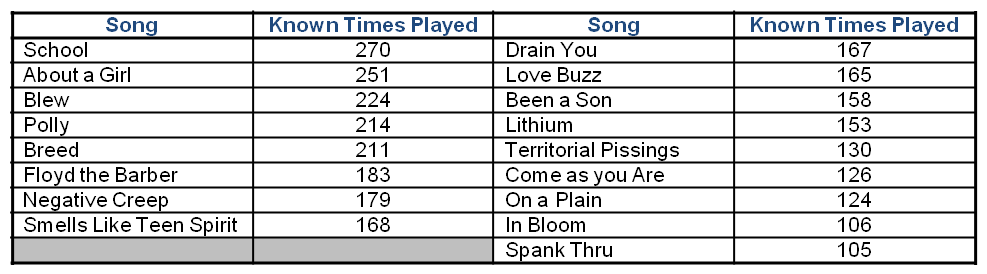
Blew is a special song. Sub Pop, apparently, insisted Nirvana arrange Bleach in order of quality – best song first and, in my opinion, within the context of Bleach identity Nirvana the heaviness of Blew was the right choice. That the band didn’t particularly resent the choice can perhaps be implied by the fact that Blew is the third most played Nirvana live song (224 definite occasions beaten only by School on 270 and About a Girl on 251) and was the joint most long-lived Nirvana song on stage (played in 47 months – equal first with School) based on the current data at the Nirvana Guide.

Most

Blew Plays

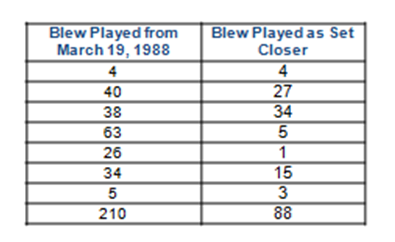
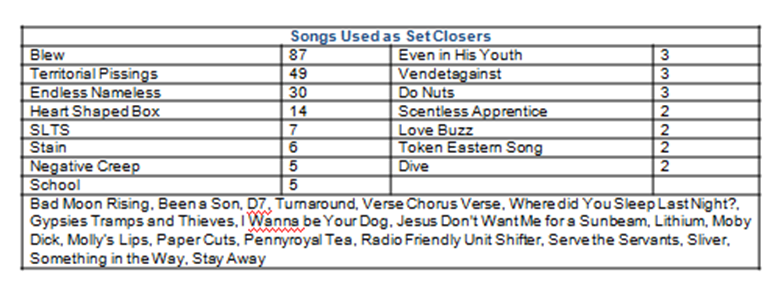
Blew, far more than Endless Nameless, was the song chosen to smash the show finale, to send the audience home on a high. Can I prove it? Well…Yeah, actually. I’ve a spreadsheet I’ve built showing the complete set-lists taken from the Nirvana Guide…I know…Obsessive or what? Blew is introduced to the set-list, apparently, on 19th March 1988. From that point, of 238 completely known set-lists between that date and 1st March 1994, Blew features 210 times. It formed the set-closer a whopping 88 times – quite impressive dominance given 33 other songs were the closer at some point or other. The nearest rival is Territorial Pissings on 49.

Blew as Set Closer 1987-1994

There’s a visible progression over time of course, 1994 – with Blew now a seven year old song – sees the first prolonged spell of absence for Blew; it was only played five times that year, only three of those times during the fifteen dates in Europe. On the one hand, while Blew remained an incredible persistent presence right through until that final year (as shown in the table below)…

Set-Opener 1987-1994

…It also gradually stopped being the likely set-closer, other songs took over and became the preferred option. What is noticeable though is that Blew never ceases to be a potential closer – it’s a set closer in every single year even if only once in 1992. It does, however, tail off as the most common set-closer from 1991 onward. It’s also visible why Endless Nameless received its reputation as Nirvana’s most common closer – it was most common as a set-list choice between August-November 1991 when Nirvana’s balloon was going up.

Making a Good Music Box Set (with no Comment on Nirvana In Utero)

As ever, no personal reviews of specific releases (plenty of people giving their tuppence whether professionally or non-professionally) but over the past few months I’ve been musing on what makes the difference between a box-set release that satisfies me and one that doesn’t. As usual this is, of course, personal opinion.

A box set or super deluxe or whatever they want to call it next, is an attempt to monetise leftovers and archived remains – at least that’s what it means to the companies who sell them. Artistic integrity, of course, plays a role and the artists involved (usually) have to be persuaded that they aren’t tarnishing their credibility and reputation with the release – they have to believe there’s something more at stake. The marketing personnel sitting in between the management decision that there may be money to be made and the artist’s decision that there’s an untold story or a tale to be better told are more concerned with making sure there’s something exclusive or something novel involved. They examine the aspects of the ‘package’ that they can use as tools to create exclusivity and/or novelty and essentially there are only a pair of options; (a) content or (b) packaging.

DVD additions, live recordings, unreleased songs, specially commissioned new tunes, remixes, alternative versions, instrumentals – whatever. It’s all a form of novelty-creation and there’s a balance between the investment versus the expected return – getting a band to record an entirely new album to accompany a release would clearly be the ultimate novelty but sinking tens of thousands or hundreds of thousands would be a poor return given this kind of recording is reserved for bands lacking a current strength of output – even the Greatest Hits is the refuge of an outfit losing momentum. Getting more mileage out of the old stuff is both the raison d’etre of these releases and a commercial necessity if they’re going to be a profitable venture.

The packaging front similarly expands and advances with ever more intricate liner notes, booklets, recording notes, reviews, commentary – preferably by someone with a brand name cachet that resonates with the target audience (“Thurston Moore has been supplied with a pencil…Prepare for content…Go!”) Advancing the art work and including memorabilia counts within this category and reinforces the case. A further element beyond the physical product is things like the creation of promo videos and other activity engaged in by the band to market and sell the release – its an extension of that item at the core.

So. What makes a good one? When creating albums artists often dedicate time to choosing the right songs, positioning them, making sense of them as a unit – but ultimately, with the exception of concept albums – there’s a fairly arbitrary set of decisions occuring related to such amorphous things as ‘flow’, ‘progression’, ‘the story’, whatever. With box set style releases, the material is all things that was rejected from or excluded during that previous conceptualisation. But there still needs to be a reason to bring it altogether – a box set always has a reason or meaning. Examples I could point to here would be (a) Siouxsie and the Banshees At the BBC, a collection compiling their radio/TV appearances (b) Jimi Hendrix West Coast Seattle Boy showing Jimi Hendrix’s progression and the phases of his musical existence (c) the Stooges Complete Funhouse Sessions bringing together the complete archive of material recorded for the Funhouse album (d) anniversary releases, commemorations, compilations of singles…It allows someone to say what an object is about.

A box set – sorry to call it this, quicker than Super Deluxe or whatever – already circumvents the simple issue of quality. The material contained is a complilation of previously released (the new box set by the Clash compiling the majority of their albums) or previously rejected material. If the release is an archive release of stuff not intended for formal release or not considered fit to be released (the Jesus and Mary Chain’s The Power of Negative Thinking box) it’s possible to try to say ‘good/bad’ but the motivations for the purchase are not based on that – there may be a minimum level of acceptable quality but the real mover is based on the ideas of secret knowledge, completion, revealed mysteries. If it isn’t about quality in that case then another option – particularly with compilations compiling previously released material such as the Jesus and Mary Chain’s 21 Singles compilation or the Nirvana box-set of singles released in 1995, is convenience. But what turns a utilitarian package, or a package of scrap material into a ‘good’ release?

There are two ways, essentially, that a box set can be a winner. The first is based on a sense of occasion – something often lacking in the flood of media these days. A higher degree of randomness in the selection can be tolerated with releases that satisfy a pent-up demand for ‘something’. Therefore, the belief that Nirvana had a bottomless vault of leftover Cobain material led to the success of the With the Lights Out release. The fact that criticisms could be levelled at its selections/non-selections, the fact that higher quality versions of some songs existed, or that other unreleased material not released officially in any other version existed, or that some of the pieces could have done with some polishing up…This didn’t matter. Ten years worth of waiting meant the audience were ready for it and pushed it to ‘best selling box set of all time’ status. Deferred gratification created a winner and criticisms seemed like sour grapes given there genuinely was a wealth of impressive, unique, unheard and excellent material there. When married to frustrated desire, to a sense of ‘the moment’, good enough was as good as perfect.

The other way a box set can win is more fundamental, it can do so by answering the questions in the mind of the audience. If a boxset declares that it is The Complete Miles Davis at Montreaux 1973-1991 then the best way for it to create satisfaction is for it to deliver precisely what it claims to; i.e, it better bloody well be every performance from Montreaux. Columbia Records, to their credit, did an excellent job of this with a twenty disc deep release and good packaging and notes. This is crucial – if the release has any kind of unifying reason or purpose then that purpose needs to be explicit, clearly expressed and obvious. Having taken control of the release and set the terms of its success, the next step is to fulfill what the declared intention or implied intention is. At the lower end of the market, kicking out a deluxe edition just by wedging on tracks off singles and some live material is fine because deluxe editions have lost their prestige and are simply intended to drive someone to repurchase. For the larger items we’re discussing here, the box sets and super deluxe editions, there’s got to be a something far greater. Lacking a precise ‘meaning’ to a release it’s a self-fulfilling prophesy that an audience won’t be highly motivated.

The second way in which a box set can succeed and inspire is by being comprehensive. Decisions on an archive box set motivated by the supposed quality of a leftover, alternative version or demo are made ridiculous because by their very nature these items are all throw-aways, none of them was good enough so declaring one to be a superior-inferior doesn’t hold much water. Likewise, if the purchase isn’t motivated by long anticipation and ‘give us anything’ buying, then the motivation is simply because people want to see what’s there. In that situation, if a release only provides a certain piece of what could be shown, the result is a tease – it creates the question “but why didn’t you go all the way? Why didn’t you tell all?” Having planted that question in the minds of the audience the release has automatically failed to satisfy. That’s why it’s crucial to a good release to frame the terms of its success in order that the release can be declared complete.

There’s the issue of glut with any box set – to be complete, for example, a Sex Pistols box set would need to include multiple redundant versions of the same songs recorded over and over at multiple studio occasions, in some cases half a dozen or more. Rather than declaring defeat, however, the better solution would be to use this to justify more than one such box-set and simply declare that as the intention. Instead the Sex Box set would be better served by being shorter and therefore only containing the main studio album plus the songs that didn’t make it onto albums, while the more recent anniversary edition of Nevermind the Bollocks could have featured all the outtakes of the songs from that album. Its one possibility. By cutting it randomly with some in one place, some in another, it left each release open to criticism. Joy Division did a much better job with the Heart and Soul box set given it excludes (but acknowledges) the band’s previous punk recordings as Warsaw, excludes most of the session for their first album, but contains pretty well every other unique studio track they recorded – the exclusions are versions or in specific places rather than leaving them open to the charge of randomness.

The Jimi Hendrix compilation of BBC recordings, again, has a central reason and focus – then sets about fulfilling that purpose admirably. It can be declared a success because its there for a reason and gives the fans what it says they will. Another example would be the confined terms of Rage Against the Machine’s first album as the XX box-set. I’m biased because I adore this album but the inclusion of the complete demos from the first session makes total sense – the DVD inclusions are then added extras but, again, have a comprehensive sense of occasion with one being their first ever performance and the other being the performance given in the U.K. after Killing in the Name reached UK number one Christmas 18 or so years after first release – that book-ending of the DVDs was an excellent move and again contributed to the unified nature of the product. Without that sense of loss, or of purpose, or of completion, a release ends up unsatisfying particularly if significant information is known about the band and about what could have been included.

An unsatisfactory box set is easy to identify. It leaves out things that people want. Or it teases fans by showing that all of something exists…But then only gives them part of it for no apparent reason. It doesn’t live up to billing because it isn’t as enlightening or as dramatically different or new as has been claimed or as audiences have been led to believe. If it has no narrative, nothing that makes it OK to add one thing and drop another – no storyline – then it makes it harder to comprehend why one thing is there and not another.

Nirvana 1989-1991: Not a Seattle Band, a Californian Band

Seattle this, Seattle that…What a sweet way to call an end to the Nirvana Tour phase of the Nirvana Legacy blog, by telling everyone that Nirvana stopped being a Seattle band long before they hit fame.

The reality of the U.S. music industry is that it, like most industries in most countries, is centred on particular locations. For bands wanting to make a successful career in music they have to go with both the demographics and access to the business; its how they make money. The ‘rootedness’, the idea of a band’s origins, is a crucial component of establishing their identity but isn’t necessarily key to understanding them as product. Initially its about creating a sense of the exotic, something new and different – “a Seattle band” circa 1988-1989 was a shorthand way for the media to easily emphasise difference in the same way that tagging something as southern hip hop in the mid-to-late Nineties was a way of establishing a different identity with consumers overloaded with East Coast/West Coast ID.

It’s an extension of a basic human urge of course, to belong. Most people identify themselves as their origin or birthplace rather than by their day-to-day living space. Nirvana, despite the origin in Aberdeen, despite living and playing in Olympia, despite being tied to Tacoma for a while, were indelibly tagged as ‘Seattle’. This is because they were part of a specific commercial strategy by Sub Pop that meant instead of marketing one band at a time they could market a whole scene at once and thus create a wider halo effect on each band’s sales and audiences that they would have had trouble achieving on the budgets available – definitely the Motown ‘hit factory’ effort. It meant that as Nirvana toured the U.S. and Europe the Seattle stamp associated them with a particular sound and style regardless of the differences between the bands under the banner.

This is the second use of geographic tagging in music; to create associations and similarity rather than difference. Once the new archetype (i.e., Seattle, Southern, Hyphy from San Francisco, whatever) is established new bands and artists adopting or being lumped beneath the tag are no longer establishing themselves as an alternative – it becomes a pledge of allegiance and tells consumers “if you like X, then you’ll like us/me too.” Again, it’s a shorthand alongside style, gender, genre that makes it easier to sift, categorise and define.

In the case of Nirvana, it was inevitable they would spend less time playing in State of Washington once they started proper touring from mid-1989 onward. Yet, it isn’t just that Nirvana ‘spread out’, it’s that their activity was strongly centred on the state most likely to give them the break through and industry attention that was required to give them a shot at the big time. Plus, being fair, the band were making barely any money for the majority of their peak touring era, it made sense to go the nearest state containing the greatest number of large cities and thus the greatest number of opportunities for large audiences in the smallest possible space. The answer was, of course, California.

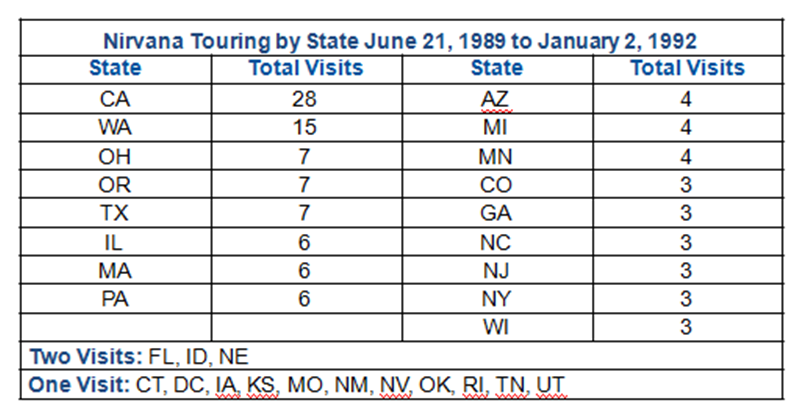
From the commencement of Nirvana’s first U.S. tour on June 21, 1989 at The Vogue in Seattle until the break after the show in Salem, Oregon on January 2, 1992 Nirvana played 31 states. It wasn’t just about covering as many states as possible, however. Eleven of those states only received one visit each, three received two visits – an awful lot weren’t visited at all. There were rational decisions being taken about where to bother sending Nirvana and where might be worth it.

Nirvana Touring by State 1989-1992

It wasn’t just about proximity though, yes, Oregon was close but so was Montano (not visited even once in those two and a half years), Idaho (two visits to Boise) and Nevada (one trip to Las Vegas.) Neither Sub Pop nor Geffen was arranging Nirvana gigs in states just because they were easy to get to, they were arranging gigs in cities with decent audiences for the band hence the seven visits to Oregon (six to Portland, one to Salem) given its combination of proximity and alternative rock friendly audiences. So far so what?

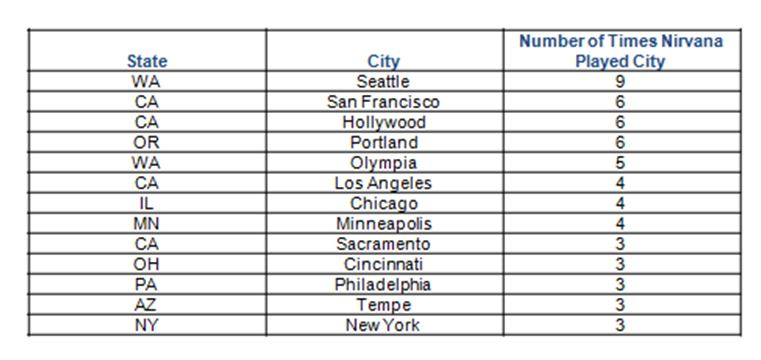
Well, essentially, all I’m saying is that from mid-1989 until the close of 1991, Nirvana played twice as often in California as they did in State of Washington. This was a significant switch, instead of being the heart of the band as a performing entity, State of Washington became the retreat, the hideaway that they headed back to when they wanted to get away from the quest to become rock stars and its actuality. It was California not State of Washington that offered them the largest audiences because there are so many decent sized cities there – Nirvana played twelve cities in California compared to only three in State of Washington, the nearest competitors were Texas (on five) and Ohio, Massachusetts and Philadelphia (each on four).

Nirvana Touring Cities Visited

The total domination of California as the crucial location for Nirvana as an up-and-coming band and as a band to be ‘developed’ on a major label (remember that no one expected Nevermind to make them megastars, the late 1991 touring was set up to raise profile and try to ensure a healthy return on the band before deciding whether to continue with them or drop them – basic economic realities of the music industry) is clear. It combined the size of population, the density of that population and the presence of the most crucial U.S. music industry and U.S. music media hubs.

Undermining me neatly, however, and reminding me not to take numbers TOO seriously…Seattle was still the single city where Nirvana played the most but only by a couple of shows…

Nirvana Touring Cities Visited the Most

Ack! Restore the crown to Seattle…Go on…Do it.

Nirvana Tour Logistics: Renting Rooms and Roaming Public Transport

DSC02858

Ten days. Seattle, Tacoma, Olympia, Aberdeen/Hoquiam/Montesano, Olympia, Seattle, Portland, Seattle. I slept in the same bed for a grand total of three nights (Weds 4 to Fri 6) and the rest of time shunted back and forth between locations and the kind hospitality of friends. It’s kinda nice knowing that if I go back there are so many people who would welcome me and give me a place to crash — I’m worth it! I do good house-cleaning! I’m an OCD tidier! I’m good at DIY! I can (almost) cook! I’m a useful house-guest and serf! …And I’ll definitely be going back.

DSC02859

Confession and self-parody. I worked eight years in Events and it gave me a liking for hotel living — running ten events a year for five years got me the initial thrill and the ultimate ‘meh’ feeling that occurs once you’re used to seeing a lot of hotels and the differences wear off. Don’t let anyone fool you, no matter how many stars a hotel has, no matter how beautiful it might be, ultimately a hotel is made for anonymous living, you are merely a by-product passing through the guts of the building and you will be expelled and all memory of you wiped away except on those rare occasions someone passes a UV-light over the fabrics. If anyone ever boasts to you about which hotel they’ve been in remember to crush them with something like, “gee, that room sounds way more interesting than you — can you just leave me with the photos and stop talking?” If that’s a little too brutal, the alternative is to come up with some attractive statistics about the number of insects living in the average mattress, how rarely hotel mattresses are replaced and the persistence of bodily fluids within the fabric of a mattress — just hijack the conversation and go from there, it’s fun to watch social-climbers splutter.

Floor 5_Hotel Max_1

Floor 5_Hotel Max_2

As a sidebar, you see it a lot in London, the minimalist look — essentially it’s a case of people admitting that they have so few interests and so little engagement with anything other than their work that there’s nothing of themselves that they can bring to a room. Again and again you’ll walk through supposedly sophisticated flats and apartments and see rooms designed by magazine advertisements and furniture catalogue committees; they look like hotel rooms because the people living in them are just transients with no engagement or connection to their environment. You’re basically there to make them feel they’re real humans and that they’re living in a home rather than a GQ-provoked paranoia telling them what it should look like. A lot of people buy houses just because they don’t have anything better to occupy their time or money and decorate it richly…with all the soul and personality of a Heathrow advert hoarding.

With that in mind though, ya gotta live somewhere. I hope I’ve at least indicated that my desire to show hotel photos is more to do with the completist urge to represent the entire trip rather than anything boastful. Oh, and did I say, hotels can be lovely to live in — if you’re route-marching cities for anywhere between four and nine hours a day, or trooping round in a car from 9.30am until into the evening, maybe you’ll want to pay a little more and enjoy it?

There’s plenty of cost saving to be had on the accommodation front. If you can plan well enough in advance the best accommodation option I saw was here:

https://www.airbnb.co.uk/s/Seattle–WA

Basically it means you’re taking someone’s spare room — very cheap, nice way to live, some lovely places on here. Might mean you’re living a little outside the centre but you’ll have the benefit of a local resident who can explain how to get in to you, plus a bit of company. Family business kept me away from being able to get this sorted and communicated and confirmed.

Alternatively, as seen the other day, the motel and inn option is well established in Seattle. There’s the strip of options along Aurora which has advantages in that you’re half way between Reciprocal Studios and the other sights located above Lake Union and then the sights downtown too. The motels I walked past looked perfectly comfortable. If I’d known they existed I’d have considered them.

Motels

I’d have to say the nicest hotel I stayed in was the Hotel Murano in Tacoma (http://www.hotelmuranotacoma.com/). Dead centre of the business district, one street (literally) from the bus stops on Commerce from whence, for $3 dollars flat rate (remember that the bus drivers don’t tend to give change, take exact money) you can catch the myriad of buses over to Olympia (http://www.intercitytransit.com/mapsandschedules/routemapsandschedules/Pages/603-605-612-Weekdays-Southbound.aspx) — I took the 603 myself, it’s about an hour. You can stop off at the Tacoma Dome on the way if you wish to stroll round it. As a sidebar, to get out to the Community World Theater’s location you will need a taxi or someone to drive you. Again, this isn’t too expensive, you might handover $25 dollars and taxis are usually queued outside the main hotels so that’s always a good place to hunt one down.


Murano_1

Murano_2

When lost in cities I usually look up a hotel and head there because the staff usually know the local area on the one hand and the street outside is a magnet for taxis on the other. I also stayed in Hotel Max which features a ‘rock floor’ with the cooperation of Sub Pop who supply vinyl LPs to every room to go with the record player, as well as LP cover art on the walls of the rooms. The Paramount was pretty darn lovely too. I had booked the Silver Cloud near Lake Union but ended up cancelling it to stick close to areas I knew better. I also didn’t book hotel accomodation in Olympia. The Guesthouse Inn & Suites in Aberdeen were pretty darn comfy too.


Aberdeen_1

Aberdeen_2

The bus station in Olympia is extremely central. The Evergreen State College is a walk-able distance from the centre if you’ve left time to do so (I hadn’t so had to abandon a few locations that day.) I think, in Nirvana terms, it’s fair to think of Olympia as the terminus either getting you back toward Seattle or Tacoma, or hurling you out to Aberdeen on the number 40 (http://www.ghtransit.com/40.html). Amtrak (http://www.amtrak.com/home) is also an option for the Seattle-Tacoma-Olympia run; greater comfort, higher price — Olympia to Seattle one way is about $20 and the station is at 6600 Yelm Highway SE, Lacey. There are three major Amtrak routes covering the North-West and all of them will get you as far as Portland. You can also use this route to visit Bellingham if you want that an extra out-of-the-way Nirvana related stop (the October 1992 show venue — http://www.wwuvikings.com/facilities/wwu-facilities.html — NOT demolished!) or Spokane (http://en.wikipedia.org/wiki/Spokane_Coliseum, demolished!)

Paramount_1

Paramount_2

If you wanted to complete the full run of Nirvana-gig locations in the Northwest then the places you’re trying to hit are Seattle (duh!), Tacoma, Olympia, Aberdeen/Hoquiam, Raymond, Bellingham, Spokane, Ellensburg, Auburn and Bainbridge Island. As suggestions for the latter three, none of which I attempted, give these a shot:

The 577/578 bus route to Auburn heading south from Seattle (http://www.soundtransit.org/Schedules/ST-Express-Bus/578?dir=inbound) and yes, the Lindbloom Student Center still exists as part of the Green River Community College: http://www.greenriver.edu/student-services/conference-and-event-center/planning-an-event-start-here.htm

For Ellensburg, give the Greyhound buses from Stewart Street a shot, it’s a two hour ride and fairly pricey, anywhere between $30-45 dollars one way (https://www.greyhound.com/farefinder/step1.aspx — the Ellensburg stop is at 1512 HWY 97, Ellensburg, WA 98926). Again, the venue is still there, the Hal Holmes Community Center: http://www.ci.ellensburg.wa.us/index.aspx?nid=145

And finally, Bainbridge Island, yet another change in transport option, this time take the ferry: http://www.bainbridgeisland.com/ferry the problem being is it was a birthday party show so there’s little indication of where it took place. This is the kinda thing that’ll cut down your travel itinerary; there’s no indication of where Speedy O’Tubbs Rhythmic Underground in Bellingham was so what’s the point of it? The venue in Spokane has been demolished, meanwhile Cobain’s former home in Carnation isn’t visible from the public thoroughfares, to look at it you’d end up having to trespass on private property and frankly do you really want to take the risk and/or scare people at home just to gaze at a home that was barely lived in?

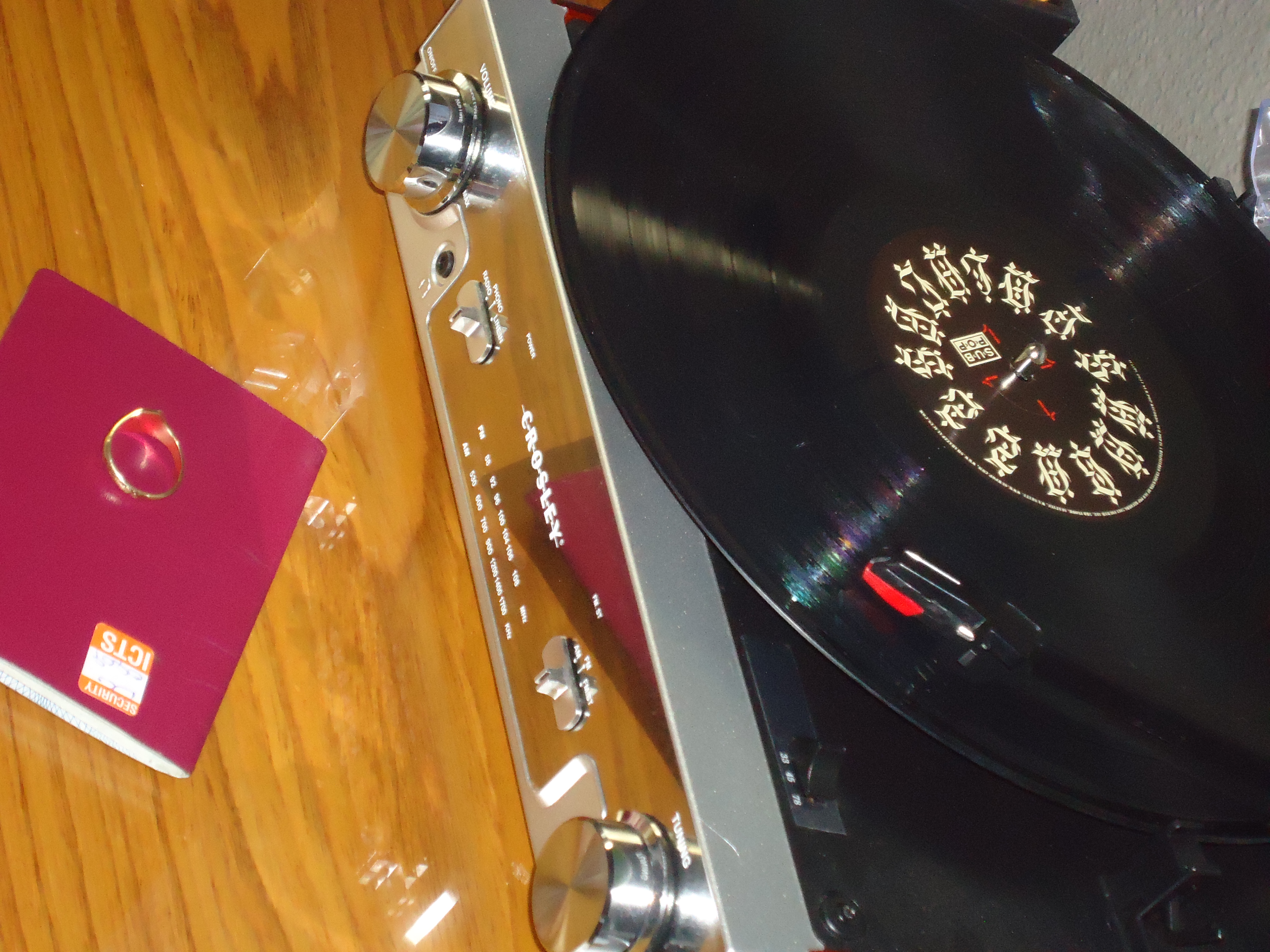
Max_Sub Pop_1

Max_Sub Pop_2

Max_Sub Pop_3

Yeah, I know what you’re thinking, you’re in America the land that more than any other has turned the automobile into a fetish; hiring a car is probably going to be the simplest option. I’ve never seen, however, an attempt to explain the public transport options for touring Nirvana sites in the North-West — it’s entirely possible to do it via public transport and to do it for well under $200 in total all in. We’re talking walking/bussing all Seattle sites with a taxi hop out to the two homes on the shores of Lake Washington; Amtrak or bus to Tacoma, Amtrak or bus to Olympia, bus to Aberdeen/Hoquiam and then taxi for Raymond and Montesano. It’s the Greyhound for Ellensburg, the bus for Auburn, Amtrak for Spokane and Bellingham, then the ferry for Bainbridge Island…