News: Nirvana Live Guide / LiveNirvana – Together to the Future

http://www.nirvanaguide.com/announce.php

http://www.livenirvana.com/forum/index.php?threads/important-future-of-nlg-and-lnth-and-introducing-the-lncc.40418/#post-673233

Anyone who has read any of my ramblings these past years will know that I incredible respect for LiveNirvana and for the Nirvana Live Guide. Whenever I’ve been asked what fandom looks like at its best I think of these sites and the work they’ve done sourcing lost, unknown, different recording of Nirvana shows and sessions; compiling accurate data and sifting myth from reality; bringing together information on Nirvana concerts and shows including photos and set-lists…

It’s amazing what they’ve achieved. Anyone can ‘comment’, anyone can write a thought-piece, but it takes a special dedication to do what these two sites have done. Hunting down and locating evidence of house parties in the far north west of America in the pre-internet late eighties, finding cassettes hoarded by people who attended and taped shows a lifetime ago, persuading people to let them safeguard, protect and share material that would otherwise deteriorate and disappear forever. Any of the analytical pieces I ever did relied on the bedrock that the people at these two sites created.

So, I was delighted to hear that the Nirvana Live Guide will now be migrating to and integrated with the resources at LiveNirvana: a single uber-source for anyone interested in where, what and with who Nirvana played over the years that band was together.

My absolute best wishes to all concerned and anyone out there with information regarding lost Nirvana shows, stuff they might have taped long ago, anything they can contribute to the knowledge placed their for fans – go see these guys!


Posthumously Respecting The Word and Art of Kurt Cobain

https://www.youtube.com/watch?v=krb2OdQksMc

Over recent years, I’ve had quite a lot of experience of death. Here’s what happens: your body empties of any vestige of the person therein, your physical presence in this world is then destroyed and/or discarded. Your family/friends/loved ones will dispose of near all the belongings you accumulated during life because – ultimately – they loved you, not your things; because they lack the life experiences that made those things mean something to you; because they have their own things to look after; because your things don’t mean to them what they did to you. Regardless of unsubstantiated rumours of life after death (I’ve lived in a haunted house and experienced auditory and visual phenomena without ever catching anything that made me think I was witnessing the active spirits of the dead), your actual involvement in the affairs of this planet ceases. After this time you are a memory – nothing any one does or does not do touches you; you are not aware; nor do you participate in any way – as a memory you exist only as a poor-quality and incomplete recollection in someone else’s head, filtered through their perceptions and experiences.

I’m indebted to an earlier comment on the blog – thanks Billy! – for leading me to this post. The coolest thing about writing the blog has been to come into contact with other minds and lives. Billy raised comments made in a 1992 interview for Flipside magazine (I spoke to one of the interviewers during the preparation of ‘Cobain on Cobain’ – nice bloke, gave me permission to quote the interview directly in the book) in which the following exchange takes place:

Cake: I’ve seen so many bootlegs of you guys, are you pissed off about that or what?

Cobain: For the most part I really don’t care. I like to hear live bootlegs and I would appreciate if the people that make them would send me a copy. But that’s the case, nobody sends me anything. But when embarrassing things come out like stuff that I’ve done in my basement on a two-track or a boombox, that are basically just unwritten songs or pieces of songs; songs I’d like to put together someday into a song…When those come out it’s really embarrassing and it frustrates me.

Cake: Like when you were playing Jabberjaw and all these people were singing Polly when you were doing it and Chris goes “how the **** do you guys know that song?” and somebody goes “bootlegs!”

Cobain: Right! It’s really embarrassing also when they take it upon themselves to title the songs for you. There are some really dorky ones like ‘The Rocker’ and ‘The Eagle Has Landed’. Oh God!

So, as a starting point, what is known of the intentions of Kurt Cobain circa 1993-1994? Well, he was working on the audio-visual work which became ‘Live! Tonight! Sold Out!’ And Nirvana’s ‘Pennyroyal Tea’ single would feature a song from MTV Unplugged. Meanwhile, he recorded one shaped up studio demo, one brief shred as part of a studio jam, then the home demo of a further song. Other than that there’s currently just conjecture. But, from conversations with Kevin Kerslake for ‘I Found My Friends’, it’s clear that the video we see – a straightforward live clip/interview clip period piece – is only a fraction of what Cobain intended: Cobain intended further levels of editing, chopping, slicing, reworking – that he simply never got to make the video art collage he wanted. Meanwhile there’s no evidence Cobain had further Nirvana plans at all (I’ve covered the mooted Lollapalooza EP elsewhere on the blog). The only other hints would be the comments made in the ‘Come As You Are’ book about his vague plans for his own record label releasing lo-fi weirdness including ‘the singing flipper boy.’

Does that make all posthumous releases by Nirvana illegitimate? Well, actually, if you want to take a fundamentalist position: yes. Cobain in no way authorised, approved or had any consideration of any release after the planned ‘Pennyroyal Tea’ single. If the express wishes of Kurt Cobain are what matter most to you – then you should reject everything after that.

Billy’s first query was “does the fact that Kurt passed away justify releases that betray his wishes or what he would’ve done (basing this on his own words of course)?” There are a lot of intriguing avenues in here. Firstly, for normal human beings like you or I, our words don’t go on permanent display to be hauled out and used decades later in our name or to show us (or those around us) where they’re deviating from holy script. The very fact it’s possible to do that is an oddity created by fame and celebrity – and reliant on fans preserving and compiling Cobain’s interviews regardless of whether he would have found that creepy or intrusive. You and I, we’re lucky, we have the gift of forgetfulness: I feel for John Lydon when his world-changing 18-20 year old self is waved in his face as if that’s all his 60 year old self should be allowed to be – I’d be a lot more perturbed if someone didn’t evolve, learn, grow, change as they live life.

In the case of Cobain, he’s forever trapped in the words of a 20-26 year old young adult, from age 24 one in the middle of an unprecedented disruption and disturbance of his life. There’s also the wider context: Cobain’s time in the music industry ended in the pre-Internet era and before the huge mechanism around the release of demos and outtakes exploded. To use Cobain quotations to claim what he definitely would/wouldn’t have done in a fundamentally different industry, as he approached 50 years old, with his work lacking the halo of death: it requires one to view Cobain as a stone statue, as someone on whom an opinion can be imposed without them reacting or changing – a dead man.

Cobain, on Nirvana’s very first release, wedged noise segments into the recording; on the band’s first album it was only the record label’s refusal that stopped him sticking ‘Beans’ on the record; there are random background noises to ‘Nevermind’ songs; noise jams wedged on the end of 1991 and 1993 albums; the band’s own archives raided for a Christmas demo/outtake/radio release in 1992; the noise jam backing William S. Burroughs; his contributions to Melvins at that time – Cobain’s objection to illicit release of stuff he didn’t like doesn’t mean the kind of material that came out on ‘Montage Of Heck’ wasn’t material he could/would – or couldn’t/wouldn’t – have found a use for. To argue otherwise is legitimate, but does mean trapping Cobain in the identity of the mainstream singer-songwriter pop-punk figure and refusing to place equal value on his very broad artistic, musical and creative palette. It comes down to competing visions of who Cobain was and, therefore, is. Again, those visions are something imposed by onlookers and you/I/we are all entitled to see him differently. It doesn’t mean we have absolute right to predict his future choices.

Intriguingly, we wouldn’t even be having this conversation if Cobain had lived: his death fundamentally changes everything. Deciphering whether Cobain would have become a Johnny Cash style troubadour, an Axl Rose style recluse, a convert to electronica and the potential of remix culture, a lo-fi home recorder in the Lou Barlow mode, a reformation tour band leader, a noise experimenter or improviser in the Thurston Moore mode…Who’s to say? Of course that question has direct bearing on the reaction to posthumous releases. There’s no indication whether or not Cobain would have been happy to see ‘MTV Unplugged in New York’, ‘Live At Reading’ or ‘Live and Loud’ released. ‘Live! Tonight! Sold Out!’ is definitely and demonstrably not what he intended to release if he hadn’t died. If more outtake releases and ‘product’ were required there’s no way of telling what from the ‘With The Lights Out’ boxset he would or wouldn’t have been willing to release. It’s all personal opinion and belief: using Cobain’s words to sanctify choices he never had a chance to make doesn’t validate or justify one’s choices any more or less than someone else’s opposing view.

This brings me back to the Monty Python clip: it seems very pertinent to this kind of discussion of Cobain – a man who gives no impression of having wanted people following him around or worshipping his words as incorruptible religious text to be used to bless or condemn others. Using Cobain’s 1992 words to condemn releases he wasn’t, isn’t and never will be aware of seems inane at best. Cobain’s words shouldn’t be used to dictate the behaviour of other human beings for the rest of their lives: having made commercial arrangements with record and publishing companies, he explicitly granted them a degree of control over his work. Similarly, Krist Novoselic, Dave Grohl, former members of Nirvana, Frances Bean Cobain, Courtney Love – they were all given degrees of control by Cobain. These are factual indications of his intentions so why should they be downgraded and random interviews be privileged instead?

Billy raised another question: “does an artist’s wishes matter?” The answer is an absolute yes…And, on top of the rights the artist grants to others in exchange for support of one form or another, those wishes are called a will. A will is the official, provable testimony of an individual regarding what they want to happen after their death. It means that random people on the Internet, random strangers in the street, relatives you’ve barely seen in years, commercial contacts you’ve had to work with – none of them get to twist your words or speak on your behalf. I was in a position fairly recently of having to execute someone’s last wishes – whereupon other people told me that my relative had intended something different. I explained openly that I would stick to what was written in the will and, secondly, what I was told by him in person. In the case of Cobain, piecing together his intentions from public sources, having never met him, having no personal experience of him, it would seem a grim way to ‘respect’ him.

The final part of what Billy raised was “if you specifically go against (or ‘rape’ as Kurt may have put it), their wishes and disrespect them, can you still really call yourself a fan?” This gets to the crux of something for me: no one has the right to tell you if you’re a fan or not. Cobain spent his life seeking to escape the control of family, boss, record label. The charitable causes he used Nirvana to support were about freeing people from the vulgar imposition of power by others – he believed everyone had the goddamn right to be who they are, how they wanted, without anyone else telling them they couldn’t. He was a punk after all! If you want to hear every note Cobain ever played, if you just want to hear the official releases, if you don’t want to hear anything he didn’t personally choose to release before his death, if you just occasionally enjoy one song or another – no one, repeat, no one, gets to tell you that’s wrong. Anyone who believes that imposing their views on others is the thing to do when it comes to Nirvana hasn’t learnt much about Cobain and “don’t know what it means” when it comes to his music.

In my eyes, the best fans are ones who have taken Cobain’s words and decided to do something active in this life: frankly, making a consumer choice to buy or not buy a record is a pretty poor way to show respect to Cobain isn’t it? Over at LiveNirvana there’s a community of fans devoting however much or little energy they can to finding and preserving recordings, interviews, images of Cobain and Nirvana – that’s an amazing thing to me. Then again, if that’s not your thing, that’s cool – you’re allowed to just enjoy the music however you wish. In my case, writing about the uncertain living conditions Cobain endured in his teenage years, the absence of a home or of security, it reinforced my decision to volunteer at a group supporting the homeless and to donate regularly to homeless charities. Showing respect and honour is about DOING something: it is not about telling others what to do or demanding they do it differently.

A gentleman percussionist called William Hooker bequeathed me a beautiful statement earlier this year: “if that’s your thing, that’s great, I’m not dismissing it – it’s just not MY thing.” That’s what’s missing a lot of the time. Cobain’s final plea was for ‘empathy’, the desire to listen to and respect other peoples’ feelings without trying to control, overpower or deny them. The world – particularly this year – seems to find it hard to move beyond right/wrong dominance or to do the hard work required to accept others feel differently and to seek commonalities.

I’d personally rather Cobain’s music didn’t rot in a Californian vault – I don’t see any great honour in burying his music along with him. I thought, and people are welcome to disagree with me, that the ‘Montage Of Heck’ soundtrack, out of all the posthumous Cobain-related releases, was closest to his true anarchic artistic spirit. Far from dishonouring him I felt it showed him to be a true artist, someone complex and hugely varied. So, the most crucial statement I can make today is, this is just my opinion – yours is good too. On this blog, sure, I’ll state my beliefs and put forward my reasoning and evidence – I hope it’s fun for you to read and if you have a different opinion on the things discussed…Wicked. That’s all good! I mean, wow, I’m kinda just delighted we’re all still here in late 2016 discussing the life and works of a man and band who ceased to be 22 years ago.
Kurt Cobain: Could He Have Changed?

At the Louder Than Words literary music festival in Manchester last weekend I watched Penny Rimbaud (once and always of Crass) speak of his life philosophies and experiences including time spent at a meditational retreat: his conclusion being (I paraphrase) “I stared at a wall for 13 hours a day and discovered I only had enough content for 3 days.” It’s a fun thought, that ultimately the brain gets bored, can’t regurgitate enough of its memory banks to entertain for longer than that. I feel the same at times: writing about Nirvana near every single day from February 2012 to the tail-end of 2016 left me, suddenly, with an absence, a feeling that I didn’t automatically have a reservoir of additional words to draw on. What to do? Well, I’m a strong believer that when inner resources are low, other people are a source of energy.

In this case, I was privileged enough to speak at an event in Carlisle on Friday night for Words & Guitars during which I was asked a fine question (which, again, I paraphrase): “was Cobain unable to bring himself to change?” The question has been whirring round in my mind for a few days now.

The question was a reaction to some of my earnest beliefs regarding Cobain: that music had been a way to live a life free of bosses and free of control, to achieve an unmediated expression of self when, where and how he wanted (an understandably powerful force for a boy/teen who had so many homes, been rejected by so many people, had been so unwilling to exist within the context of a job.) That this way of being had been compromised repeatedly from the days of Sub Pop onward and – in late 1991/early 1992 – became an intolerable imposition on the privacy and freedom he sought. Interviews, intrusion, his personal life and desires, how and when and where he played, the expectations placed upon his performances and his music, the analysis of his lyrics and thoughts, the commercial requirements, legal requirements, managerial requirements: it meant music was no longer an escape, hence the evidence seems to show he virtually ceased to write music, perform music, interview, record music for the remainder of his life.

His attempt at ‘change’ was an interesting one: he essentially reverted to the only other happy life he had ever known – the family that had existed until 1976 (Montage of Heck, the film, portrayed this sense of the mirror image very effectively). It’s 1992, he gets his girlfriend pregnant and instead of insisting on abortion he decides he wants a child and, more so, he wants to get married to create the stability he had never experienced – it’s a strangely conservative move for the world’s foremost punk icon of the era. It creates a retreat for him: a cocoon which his managers, fans, band need have nothing to do with – where he can escape them all. It’s essentially what he does: buries himself in a series of hotel rooms and temporary residences right the way from the end of the Asia/Pacific tour until January 1994 when he moves into his lakeside mansion in one of Seattle’s exclusive areas; hides away with his new family (and his drugs) as long as he can. It’s an attempt to escape, to change the destination his life has reached, to escape the nagging feeling that his genetic inheritance and his owninging condemned him to re-live all that was worst.

It fails. Ultimately he has to return to performance, he’s too polite to turn down a lot of the demands on him (though he might rage in private or engage in mild protest, for example, by never playing Smells Like Teen Spirit for MTV, only turning up to 18 days in studio after the recording of Nevermind, refusing most interviews), he ends up with almost everyone who loves him explaining to him the consequences of his continued drug use…And with his music and his family both no longer providing him a retreat he has a significant spiritual crisis to confront: if the only lives he’s ever known, family and music, are at risk, then can he imagine or foresee a life after them? The answer is no.

So, on the one hand, it’s clear he does make a quite significant attempt at change right there in 1992. But then again, the question really seems to be asking whether there wasn’t a more positive way out – could he stop drugs? Couldn’t he leave music behind (if necessary) or change his engagement with the music industry to suit himself better? Wasn’t there any chance of a continued existence with Nirvana or without it? Couldn’t he envisage life as a divorced father or, at least, a lengthy period of mending the familial bond (not being doped off his head likely helping with that)? My answer at the time came down to the futures I could imagine for him: Cobain was an incredible magpie for the sounds of the underground (think of it: an album at Easter 1986, near entirely new album by Jan 1988, an entirely new album by Jan 1989, a new album by April 1990, a different album by May 1991 with the band saying in interview after interview that they had their next album ready to go and that it’d be out in the summer of 1992 – so fast!) but there’s not much evidence that he could take on the freewheeling Thurston Moore/Sonic Youth cavalcade vibe with diversions into electronica, art/music, free jazz, improvisation – that path would have required something more expansive.

The singer-songwriter, Johnny Cash-vibe doesn’t seem to beckon: people forget MTV Unplugged in New York was a corporately imposed format, that ‘Do Re Mi’ was acoustic because it was a demo not because he definitely intended it to be an acoustic song, that he only placed three fully acoustic songs on any of his albums, that his music had been getting wilder and more aggressive in 1992-1993 (remove the older songs written pre-Nevermind and placed on In Utero and what’s left is a lot of aggro and gloriously punky noise) with the last new songs he played with Nirvana being the raucous ‘You Know You’re Right’ and the small shred played live in November/December 1993 then demo’ed briefly in studio in January 1994. But he was verbally dissatisfied with the repetitiveness of playing loud-quiet, verse-chorus-verse material too: so a more likely path is a dive back into the underground – it was suggested to me that Cobain could very readily have slotted into the noise provocations of Earth, perhaps his continued relationship with Melvins might have inspired him to follow their more aggressively independent path. Essentially if he chose to keep repeating the formula that made him mainstream worthy then he’d have sunk, same as the other alt rock gods of the era (Smashing Pumpkins, Pearl Jam) did when tastes moved on in the mid-to-late Nineties: popular taste waits for no man and few artists get a top flight career for more than a few years.

My favourite vision of him, however, was suggested to me when I thought of another character Cobain is often compared to – Axl Rose. Beyond the mutual abhorrence, the clear differences in style, ego, impetus – Rose achieved what Cobain had wanted: an apparently utter independence from any fresh label demands or requirements. The fading of hard rock hadn’t decapitated Guns ‘n’ Roses, they remained ‘the other’ biggest rock band of the years 1991-1994. I have no desire to see an aged Cobain taking to the reunion circuit looking flabby, plastic, weary and leading audiences in karaoke run-throughs of Nirvana songs: my fondest outcome would be a clean Cobain, retreating entirely into private recording, maybe the odd show here or there, the odd guest appearance with friends, but otherwise devoted to recording the album the world is waiting for…And then never releasing it. Just letting the expectation, the imagining, the myth run wild – while remaining utterly immune to it. It’s pretty much what happened with his death – it’d be lovely if it had been his life too.

So, could Cobain change? The additional thought that came to me was how much change Cobain had already experienced in his life: a vast number of addresses, homes, temporary homelessness and so forth during his young life – he rolled with it. The daily change that comes with touring as one rolls in and out of vans, floor-space or other inadequate sleeping arrangements, on and off stages, round towns and down roads. The changing array of personnel lined up behind his musician vision. The move from demo, to studio, to single, to album, to full label artist, to new label…It seems churlish of me to have forgotten how much change Cobain had endured in a very young life. In many ways he had changed more than most people do by age 27: most people have rolled with the expectations placed on them – from school, to university, to work, to relationship being just one path. People value positive change: quitting smoking, taking up exercise, moving home, moving job – Cobain is maybe not being credited for the amount of change he did endure though it’s very true he remained a man with a particular vision and particular desires until the end.

Live in Carlisle: Nirvana, Cobain on Cobain, Conversation

http://www.cumbrialive.co.uk/Author-Nick-Soulsby-to-discuss-his-journey-in-search-of-Nirvana-0cd8655f-c92f-47e1-b930-da3647d8dbcb-ds

Friday 11th November at Cakes & Ale (Castle Street, Carlisle) – something a bit different for an autumn evening, I’m going to be sitting down with Doug Baptie (who runs the Words & Guitars magazine/site) and talking about Nirvana.

Sounds like my kind of venue, frankly, the idea of sitting with a group of enthusiasts, with a decent beer, trying to pour out more of the material I’ve learnt these past years. Sometimes I have trouble remembering it all: conversations with 230-odd of the people who played with, shared stage with, recorded with Cobain and Nirvana – conversations with well over 100 of the journalists, radio hosts, students who interviewed the members of the band over the years – that whole visit to the North West of the U.S…

I’ve moved on – just finished preparing “We Sing A New Language: The Oral Discography Of Thurston Moore” for release in the U.K. (Omnibus) next spring, then in the U.S. next summer; commencing work on other works; of course the interviews, reviews, brief articles I’ve contributed to Words & Guitars, The Vinyl Factory, Clash – so it’s nice for me to have had this time to sit and go back over my own words, to go back to the beginnings of the blog and look at what I was working on and the patterns I was seeing from all the data available about Nirvana and their activities.

I’m going to take an album of photographs with me focused on Aberdeen, WA – I think Cobain’s journey is amazing because of where it starts; I want to talk about the speed he’s working at and developing at during the late Eighties (a new album’s worth of material every year 1986-1990 showing off his mastery of different aspects of the U.S. underground); the coincidences/contacts that Nirvana benefited from and that helped them rise…Then, at some point, I guess we’ll talk about the path down.

I like the idea of just sitting discussing it with people who are curious about the subject, hearing what people have to say, knocking back and forth the topics on their minds…Is there a nicer way to spend a night than with fellow travellers?

Naturally, if you’re in the North West or feel like a trip over there (I’m intrigued to see Carlisle, never been myself) then everyone welcome. I’ve been told the bookshop hosting this is charming.

Totally separate topic: I had the good fortune to interview Adam Harding of Dumb Numbers, charming bloke, I’ve become a real follower of what he’s been expressing with the band…

In Conversation: Dumb Numbers’ Adam Harding


The Magnet Men, Chad Channing, John Hurd and Nirvana in 1987

picture1

I had the good fortune to encounter and interview Mr. John Hurd – formerly of The Magnet Men, a band that features in the Nirvana story as the band Chad Channing was in when Kurt Cobain and Krist Novoselic first encountered him (at a show Nirvana played under the name Bliss with Aaron Burckhard apparently on drums in August 1987 – their last known show of the year.) John was kind enough to share his memories of the band, the era, his remembrances of the rock scene in the area at the time Nirvana were starting out.

I first picked up the guitar when I was 11 – I talked my parents into buying me a cheap electric from the Sears catalog. It had a die-cast metal whammy bar that broke right off when you tried to use it. A real piece of shit. Too much so to even take lessons on it. So I got a better guitar soon after and started taking lessons at the age of 12. At about 17 or 18 I started going to punk shows. Besides Community World Theater, there was also The Crescent Ballroom, which hosted tons of shows around that time: one of my favorites at the Crescent was when the Butthole Surfers played. I think that was the show that they damn near burned the place down with some kind of cheap pyrotechnic display.

The Magnet Men first formed when I was eighteen. I was still in school but cutting class all the time. Most of my friends had already graduated and were doing jobs and trying to move out of their parents’ houses. There was a communal apartment on Bainbridge Island where Chad lived with Andy Miller and James Nybo. We had a tight knit group of friends that would hang out there almost every night playing guitars and talking, partying. Chris Karr and I had been jamming together and approached Chad about starting a band. Both those guys had been in bands already but this was my first real go at it. We all liked the same weird bands and kind of had an idea what we wanted to do. One of us would bring a riff or a song and we would just learn it and try to fit the pieces together. Very much a learn as you go kind of thing.

The original lineup was Chris Karr on Bass, Chad Channing on drums and me on guitar. Chad and I first met when we were youngsters around 1980: I was 11 and he was about 14 or so. We were playing with gasoline with a few otter neighborhood kids. We had a Folger’s can with some gas in it and we were flicking matches at it. When the gas caught fire, one of the kids kicked the can and the flaming gas landed on another kid’s arm and caught his jacket on fire. Rather than taking the jacket off, the kid ran screaming down the street, flailing his arms and making it worse. His hysterical brother ran after him yelling ‘My brother! my brother!’ When we started hanging out again through mutual friends in ’87, Chad and I had both forgotten we had ever met when we were kids. One night he was telling the Folger’s can gas story at a party and my jaw just dropped.
Chris Karr was a schoolmate of mine who played bass in NPO and the high school jazz band (incidentally with John Goodmanson on guitar too). Poulsbo’s North Kitsap High School produced some notable talent – John Goodmanson (NPO, Danger Mouse, engineer and producer of Death Cab for Cutie, Sleater-Kinney), Ben Shepherd (March of Crimes, Soundgarden) Chad Channing (Nirvana, Fire Ants, The methodists, Before Cars), Damon Romero (NPO, Lush,Treehouse, Bell) Jason Everman (Stonecrow, Nirvana, Soundgarden) to name a few. The Magnet Men was my first real band. We were a heavy prog-punk instrumental band. Our only criteria about song writing was that the songs had to be complex, difficult and fun to play. We loved to do lots of tempo and time changes and abrupt starts and stops. We would practice anywhere we could find space, but eventually we convinced the local storage unit facility to let us rent out a garage and jam late at night after they closed. For gigs, we would play at house parties mostly, being a little too young to play in bars and clubs yet.
Once we had a set’s worth of songs ready, John Goodmanson invited us to play live on the Evergreen State College (Olympia, WA) radio station, KAOS. We had no vocalist then, but were a purely instrumental band. Soon after that radio show, Ben Shepherd joined us on vocals, we changed our name to Tic-Dolly Row, and we did another live radio show at KAOS with him. Those recordings probably still exist somewhere, although I’ve long since lost any copies I had. Ben came up with the name Tic-Dolly Row, describing it as a sailor’s term for down-and-out. It comes from the french word ‘Tic Douloureux’ which is a painful nerve disorder of the face.
We used the KAOS radio show as our demo and sent it to Community World Theater in Tacoma. Tacoma was and still is a working class town about 45 minutes south of Seattle. There weren’t too many all-ages places to play back then but Community World was definitely one of the most active. I’d gone to see a couple shows there, I think Killdozer and The Melvins. We got a gig opening for Inspector Luv and the Ride-Me-Babies, Sons of Ishmael and the band Bliss, who would go on to become Nirvana. That lineup was Kurt Cobain, Krist Novoselic and I think Aaron Burkhard on drums. Although it could have been Dave Foster. Community World was an old, run down hall with a small stage that hosted some really legendary shows. The audience the night we played was fairly small, consisting a lot of our friends and a couple dozen local Tacoma punks. As far as what they were wearing, it’s hard to say. I seem to remember leather jackets, jeans, trench coats or army surplus stuff. Some mohawks here and there.

I remember being pretty nervous playing that show. The sound there was pretty horrible unless the place was packed with people – that night it wasn’t. But we still rocked it. I remember Ben jumping around and pretending to fuck a lingerie clad mannequin they left on the stage. After we played, Bliss used Chad’s black North drum kit, with the scoopy looking drums pictured on the “Bleach” cover. Watching their set, you could tell that Bliss had something, but honesty they didn’t leave a huge impression – to me they sounded like a lighter version of The Melvins.
Later, when Nirvana signed their first deal with Sub Pop, they were looking for a new drummer. They remembered Chad from that show we played, and after Tic-Dolly Row broke up, he joined them. When Chad joined Nirvana, they became a force to be reckoned with. They played out all the time, at clubs, lots of house parties and crazy floor bending packed rooms in the Evergreen State College K-dorm activity area. Chad and I were roommates during some of their first US tours, and he came home with great stories, videos and photos. Sub Pop gave them only a tiny monthly stipend, so I got Chad a job working part-time for my mom’s ceramic business. We slip-cast and glazed a shit ton of very cool ceramic fishes. Kurt lived in Olympia at that time and Krist lived in Tacoma. They would drive the van up to our house in Poulsbo and pick up Chad for band practice, then driving the 2 hours back to Krist’s house in Tacoma for the weekend. My mom is proud that Nirvana once practiced in her basement. She is still a fan. I can’t say that I knew Kurt very well. He was usually pretty quiet and a really nice guy but kind of hard to talk to. Krist was just the opposite, hilarious and friendly. He usually had a gallon jug of Gallo red wine or a case of cheap beer at the ready.

That band (Then called Tic-Dolly Row) changed again when Chad told us he was getting burned out on drums and wanted to play guitar. So Andy Miller joined us on drums and Ben wanted to play guitar too. So we had 5 of us now, trying to make a go of it. At times We had 2 drummers and 3 guitar players. I feel like the whole thing just kind of got muddied with noise and eventually we all just decided to move on to other projects.

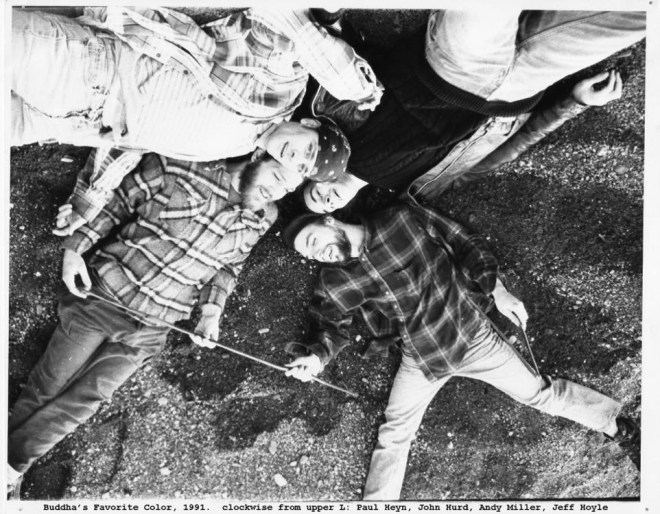
Soon after that, Chad joined Nirvana and Buddha’s Favorite Color was formed. That was Jeff Hoyle on vocals, Andy Miller (Bell, Before Cars, Paundy) on drums, Chris Karr on bass and me on guitar. We were a very psychedelic, heavy group. Jeff has a real gift for poetry and turned it into song lyrics. He has a pretty amazing vocal range. Andy was (and is) an insanely good drummer. With his jazz background, Chris’s bass playing shaped our sound. Chris would never play a song exactly the same way twice which probably rubbed off on all of us to keep things fresh. We recorded our first demo in ’89 with Rich Hinklin at the old triangle-shaped Reciprocal Recording studio in Ballard (where Nirvana’s Bleach and a lot of the first Sub Pop records were recorded). We sent it off to Alternative Tentacles records. They passed on us, but we were giddy when we heard from Steve Fisk that Jello Biafra thought we were the most psychedelic band in the Northwest. We got some pretty good response from the demo and played around Seattle quite a bit, at clubs like OK Hotel, The Central Tavern, The Vogue, Hollywood Underground and some loft parties in the Pioneer Square neighborhood.

picture1

One of my favorite gigs Buddha’s Favorite Color did was at the Squid Row tavern in Capitol Hill opening for Afghan Whigs. It was their first Seattle show, promoting their first single with Sub Pop. Fuck, they were LOUD. The police showed up after getting several noise complaints. This was a busy urban neighborhood, but the cops made them turn it down anyway. One night, Buddha’s Favorite Color was to play a house party on Bainbridge Island with Nirvana. The party was in a big garage at this girl’s house when her parents were away. Right before our set, our bassist, Chris Karr, was standing under a door jamb and a big piece of plywood fell down and banged him on the head. He decided he was too dizzy to play, so Nirvana went on first. They probably were four or 5 songs into their set when the cops showed up and broke it up. There was a keg of beer and a bunch of drunk underage kids. I remember the first kid they saw holding a beer was arrested, and everyone else scattered.

BFC recorded 3 demos over the next few years, calling it quits around ’92. On our last recording, Paul Heyn replaced Chris Karr on bass. He was in the band about a year.
The next band I was involved in was The methodists, forming in 1995. The methodists were a guitar heavy pop band. The lineup was Erik Spicer on guitar/vocals, Dan McDonald on bass, Chad Channing on drums and me on guitar. We hit it off creatively very quickly and became a song writing machine. We played around the Seattle area a lot in the mid to late 90’s, and some shows in Portland and LA and recorded our one and only LP, Cookie, in 1998 engineered by Kip Beelman and mastered by Jack Endino. This band was a lot of fun – Chad and I would trade instruments during our set and Chad would get up and sing his
songs while playing guitar. I would play drums on his songs and try to keep up as best I could. We did a live room show on KCMU (now KEXP) before going off on west coast tour. We came back from that excited as hell but things eventually petered out with that band and we broke up in ’99.


Brian’s Nirvana Tour of the U.S. North West Part Three: Aberdeen

mini-DSC_0716
As most fans know, Aberdeen was the home of Kurt Cobain during his childhood, in which Kurt stated in interviews that he never felt accepted in, among other negative statements. After visiting, I can tell you that Aberdeen has come around in the past few years in embracing Kurt in various ways. Whether its through its yearly Kurt Cobain celebration, maps to various Kurt related spots in its History Museum, or at “Kurt Cobain Landing,” there are tributes to be found for any Nirvana fan. 
 
The town itself is fairly secluded from the overall population of the United States, and still certainly has its struggles with the homeless population, some boarded up and/or burned homes, run down business, among other concerns. However, perhaps Kurt would have had a slightly more positive perspective of the town if he had grown up in the Aberdeen of 2016. While there are currently no music stores, nor tons of places to really go and hang out for locals, there was an overall peaceful and laid back vibe to be found through much of the city. This is a town that while still in need of more modernizing, was not the gloomy and depressing place (at least not during my visit) that it is often made out to be.
 
1210 East First Street Aberdeen, WA USA (Kurt Cobain’s home from the time he was a toddler until his parents divorced when he was about 8 years old) – nice but dated yellow home, looks just as it has been pictured for some years online. Still up for sale, but not advertised anywhere on the property of the house itself. The curtain was slightly open on the right side of the home where the living room is, so I took a quick look. The interior of home still has the 70’s style, with brown carpeting in the living room where the fire place is. There is a small left side alley as well as rear alley access by car. Street parking also available in front. Only a few blocks from the Wishkah river (Young Street) bridge and Kurt Cobain Landing aka Kurt Cobain Memorial Park.
 
609 West Second Street Aberdeen, WA USA (Melvins former rehearsal space where Kurt Cobain frequented + sometimes slept in a cardboard box on the patio when he needed a place to stay according to stories, and former(?) home of the family of Dale Crover of the Melvins) – red home with no trespassing sign on front of house. Tough to imagine Kurt sleeping in a cardboard box there (no patio in front of home, only steps up to front door), however house is a good size which stretches to the back, where there may be a patio in back.
 
1000 1/2 East Second Street Aberdeen, WA USA (the first house Kurt rented of his own) – building was condemned and torn down in 2009. Short walking distance of a few blocks from Kurt’s Moms’ house (1210 East First Street). Previously sat behind a larger home in a corner where the road curved. Wouldn’t know a home used to be there nowadays without knowing about its history. Now the spot of the building is just an open spot in what passes as a small backyard for the larger home in front.
 
1120 Fairfield Street Aberdeen, WA USA (former Nirvana bass player Krist Novoselic’s home) – down the road on top of a steep hill (aka Think-of-Me-Hill). Very nice large, white and green home. Possible to walk there from the Young Street bridge at the Wishkah River (Kurt Cobain Landing), with the only tough part being the long walk up Think-Of-Me Hill. A big step up from where Kurt was living in Aberdeen.
 
Rosevear’s Music Center Aberdeen, WA USA – now permanently closed. (Guitar store where Kurt got his first guitar) was located in 3 locations over the years – 110 E Wishkah st (now Coastal Print Works), 211 E Wishkah st (now a religious store) & 224 E Wishkah st (now a bank). I looked for the star of Kurt on the Aberdeen Walk of Fame on the sidewalk that was said to be where the store used to be, but could not find it. However, I found many other stars walking the East & West Wishkah St including one of NFL legend John Elway.
 
The Pour House – 506 East Wishkah Street Aberdeen, WA USA – also now permanently closed. Home of Nirvana’s (an early incarnation) only Aberdeen gig must have recently closed. The long blue building is there with the name still on front, but all of the windows are boarded up. Pour House is a bit tricky to find if driving. It is near downtown Aberdeen just over the main downtown bridge. 
 
Nirvana Mural – around 300 East Wishkah Street Aberdeen, WA USA – (Added in September 2014 with Krist Novoselic and former Nirvana drummer Aaron Burckhard appearing at the unveiling) – a great addition to the downtown Aberdeen area, covers much of Nirvana’s history as well as name checks tons of bands Nirvana either played gigs with and/or were influenced by. Shows bass player Krist Novoselic & drummer Dave Grohl in the center with a 1992 concert photo of Kurt with his back turned to the viewer in between. Obviously purposely done to not exploit Kurt’s memory, however a photo is painted of Kurt as a child near the center on the left side as well. Lots of inside Nirvana related messages on the sign that only a dedicated Nirvana fan would be able to pick out the meaning of, including Dave Grohl’s “Chaka” bass drum from the Smells Like Teen Spirit music video.
 
Krist Novoselic’s Mom Maria’s Hair Salon – 107 S. “M” Street, Aberdeen, WA USA – (Nirvana held rehearsals here upstairs on the 2nd floor) – green building near the heart of downtown Aberdeen, is currently with the windows boarded up as well. No business are currently located there. Could pass for a two story home from the looks of it from the outside.
mini-DSC_0763mini-DSC_0726
Aberdeen Museum of History – 111 East Third Street Aberdeen, WA USA – (Museum with various Kurt Cobain/Nirvana related artifacts) – free Museum that covers Aberdeen’s history in nice detail. There are some cool Nirvana related items here. They currently include the couch Kurt used to sleep on when he stay at Lamont Schillinger’s home in Aberdeen in the mid 1980’s. There is also the bench that used to sit in Viretta Park outside Kurt’s residence at 171 Lake Washington Boulevard East in Seattle. The bench in Viretta Park is apparently changed every so often due to the large amount of graffiti and tributes written on it from Nirvana fans around the world. The museum started selling t-shirts of the writing from the bench in its gift shop. In the exhibit there is also a large Kurt poster. Info I’ve never read anywhere online: There used to be a statue of the “Crying Kurt Cobain” that local Raymond, WA sculptor Randi Hubbard made on display in Aberdeen. Randi’s husband Bob & her own Hubb’s Muffler shop at 2208 Sumner Ave, Aberdeen, WA USA where the statue was on display from 1994 to 2014 until the Aberdeen Museum of History took it into its collection in April 2014. However, that statue is no longer there in the museum. I asked about its whereabouts and was told the artist “took it back.” I was then told that a replacement Kurt Cobain statue should be done soon, which will be put on display in the museum. There was a Kurt drawing on display of what the sculpture should look like when it is finished. It is Kurt circa 1993, sitting with his hand against his face, looking bored. The lady said the new Kurt statue is being made by the museum’s curator and spoke highly of him, Mr. Dann Sears. In the gift shop, I found a pamphlet the Museum was giving away to museum goers talking about Kurt related sites in Aberdeen. The Nirvana related items being sold in the gift shop at the time of my visit were a “Nevermind” puzzle, “Nevermind” CD’s and $25 t-shirts of the “Kurt Bench.” 
 
I decided to email Mr. Dann Sears about the new Kurt Cobain statue he is making for the Aberdeen Museum of History. Here is his reply. Outside of a few locals who might be aware of this working at the museum, this is new exclusive info for the Nirvana community. Check it out:
 
“Brian,
Yes we had a large concrete statue of Kurt Cobain here for a short time. Due to circumstances beyond our control, the “Concrete Resurrection”, as it was named by the artist was removed from the museum.
The life size figure, I am now working on will be ready by Kurt’s birthday which is also Aberdeen’s annual “Kurt Cobain Day.”  Considering my schedule and work load the figure is developing nicely. I have attached a copy of the beginning sketch of the figure. I will depict a younger Cobain sitting under the Young Street Bridge with his journal or sketch pad, behind him will be a scrim (Screen), when the light comes on behind the screen the rest of the Nirvana members will fade into view. We are trying to step around a lot of the negativity, and concentrate on his creativity and what he accomplished in his short life span.  
Thank you for your interest in the “Music of Grays Harbor” exhibit.
Dann Sears”
 
mini-DSC_0704
“Welcome to Aberdeen Come As You Are” sign – (Done as a tribute to Kurt Cobain from the residents of Aberdeen, WA USA. Come As You Are was added to the bottom of the sign in reference to the Nirvana song, but as a more subtle reference than just saying “Home of Kurt Cobain”) – sign is on the entrance of Aberdeen furthest from Hoquiam and that leads you through their downtown area if you keep going straight. The sign has a small area you can park just off the road to see it up close. It is not a real parking spot, however. Just a dirt sport in the grass where other cars have previously parked. The sign looks a lot bigger close up than I imagined. 
 
 
Kurt Cobain Landing – under Young Street Bridge separating North & South Aberdeen, WA USA. (Spot where Kurt hung out and immortalized in the Nirvana song “Something In The Way.” Also referenced in the title to the 1996 Nirvana live album, “From The Muddy Banks of the Wishkah.” Now home to Aberdeen’s Kurt Cobain memorial.) Known as Riverfront Park, this spot is very short walking distance from Kurt’s old home (1210 East First Street Aberdeen). If driving up, at the end of a dead end street in a residential area with no real parking spots available. Park where you can. The “park” is very small. Basically a section of land between the last house on the block and the bridge. You will find a green bench near the water, a Kurt Cobain “Jag-Stang” statue with lyrics to the song “On A Plain” attached, a purple metal stand (called Kurt’s Air Guitar), a small table with seating, a plaque on the ground with Kurt Cobain quotes, another sign on a pole with lyrics to the song “Something In The Way,” a sign about the park itself, and the Young Street bridge which you can walk under with fan tributes and Nirvana/Kurt related graffiti with a sign that reads “From The Muddy Banks of the Wishkah” attached to the bottom concrete of the bridge. If you pay attention, you will also find two “Kurt Cobain Landing” signs and “KC Park” written on all 4 sides of a metal enclosure for the trash can. The area is well maintained and had no shortage of Nirvana fans coming to visit every 10 minutes or so during my 2 stops there. In my opinion, the best Kurt related site in Aberdeen.
mini-DSC_0779mini-DSC_0782

Brian’s Nirvana Tour of the U.S. North West Part 2: Olympia

Olympia is a nice, but small city, that is roughly 40 miles from Aberdeen. It is about a 15 minute drive from one end of the city to the other. Olympia has a very different feel to it, considering its proximity to Aberdeen. I can see why Kurt would have liked it. Olympia felt safer than Aberdeen, more like a place you wouldn’t mind living. The home he lived in with Tracy Marander was certainly a much better living situation than Kurt usually had in Aberdeen.

The Evergreen State College has a rural feel to the area. Unlike many US colleges, as you drive up, the entrance is a long road, nestled between large trees. The college feels more within nature than most and the trees kind of hide the university buildings within them. Once you get up to the university itself, it separates into left and right sides of the school.

Capitol Lake Park was pretty and picturesque, but also fairly small as far some city parks go. Olympia has its own farmers markets and art fairs going on, that were nice to come across. I also ran across a popular children’s museum, among other activities while in Olympia that all seemed worth checking out.

mini-DSC_0553mini-DSC_0555mini-DSC_0556

114 1/2 Pear Street Olympia, WA USA – (home where Kurt lived with then girlfriend Tracy Mirander and later with Dave Grohl in 1990-1991) nice blue home, 3 separate sections of home available for living with Kurt previously occupying the right side & right rear side of home (sections 2 & 3). Young college aged kids living there during my visit from what I could tell. Street parking is available in front of the home and across the street at the Washington State Lottery Building (that Kurt & Dave Grohl used to shoot air gun pellets at). There is also a parking lot for the Washington State Lottery building right there too. The home itself has a small alley access on the right side of the home as well and the backyard is small and only partially visible due to trees from the right side alley. Kurt wrote a large majority of the most famous Nirvana songs at this home. What I think was maybe just a coincidence, when I was right in front of the house, a car passed down the adjacent street (but not in front of the house) playing “Smells Like Teen Spirit” with the window rolled down. It hit me that I was standing in front of the house where that song is thought to have been written. Amazing.

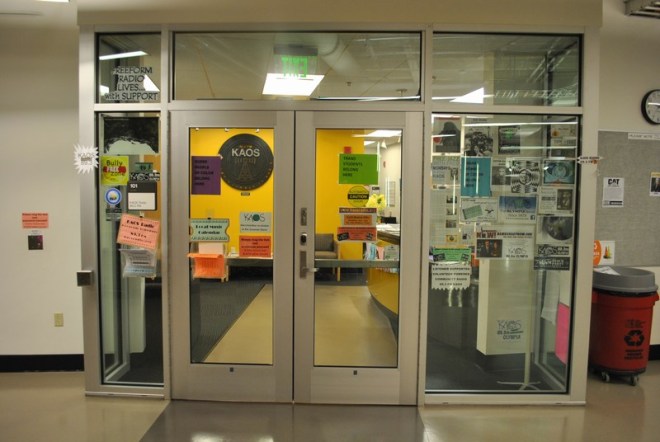
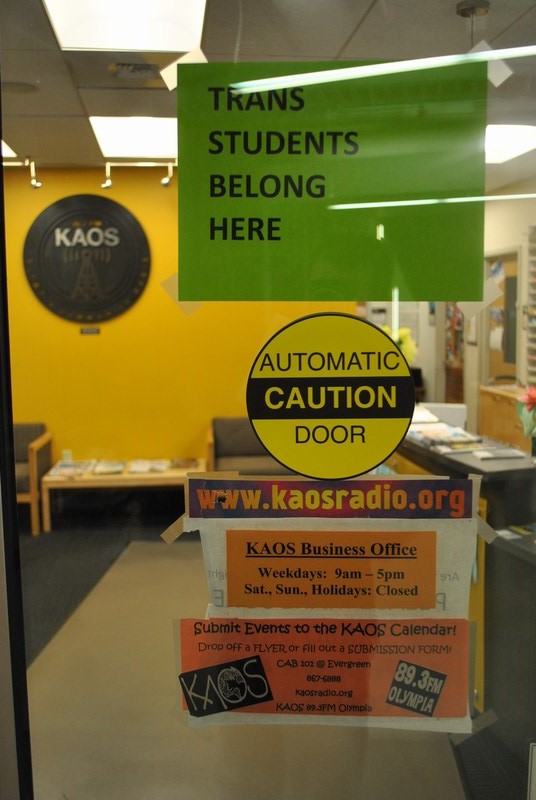
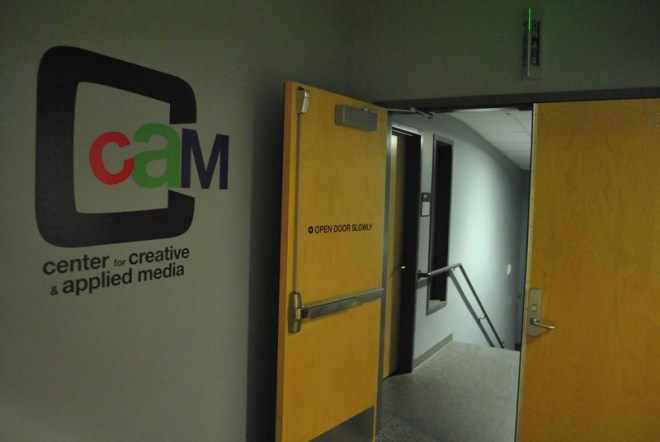
The Evergreen State College Olympia, WA USA – TV Production, Library area, KAOS Radio, etc. – (Kurt & Nirvana played shows here, appeared twice on KAOS radio station, recorded songs in the television studio & had friends that went here) – I visited on a Sunday in the Summer, so the school was out of session. However, because of that, I was able to go around and see more than I probably would have been able to otherwise. All of the Nirvana related buildings seemed to be open. The building that has the KAOS radio station inside was open and I was able to walk up all the way to its front door. Lots of interesting messages on the glass windows in front. Next to the KAOS offices (which were locked) was a billboard for upcoming events going on in the college. Nirvana played a gig near the library so I went to check that area out. While the library itself was not open, the photography section was, which has a display of various personal looking photos taken during US wars in the Middle East. Once heading further in that building, it leads to the TV & Graphic Arts rooms. Those rooms were all closed, however you could walk through the entire department and its hallways. I could kind of picture what it must have been like all those years earlier after visiting the college.

mini-DSC_0532mini-DSC_0534mini-DSC_0535mini-DSC_0542

Keep in mind that many of the places Kurt and Nirvana played at or hung out at in Olympia have either closed or have changed drastically over the years. That is the case with Aberdeen and Seattle as well. This is to be expected since it has been 20-25 years since they became apart of the Kurt Cobain/Nirvana story. I visited what I felt were the most relevant and intact places as of 2016.

If you are looking for more to do in Olympia, check out the State Capitol building, a Japanese Garden, the Bigelow House Museum, as well as other lakes and parks.

And if you want to see every related Kurt Cobain item here, you can go by the house that Courtney Love bought for Kurt’s Mom Wendy & sister Kim at 8910 Bordeaux Rd SW, Olympia, WA. Courtney purchased the house in 1997 but stopped making payments by 2003. WMC Mortgage Co. in Los Angeles was owed back payments, so the house was auctioned off in January 2006 at the Thurston County Courthouse in Olympia.

______________________________________________________________

Part 1: Seattle can be found here:

https://nirvana-legacy.com/2016/08/12/brians-nirvana-tour-of-the-u-s-north-west-part-1-seattle/

My 2013 visits are documented in the ‘Nirvana Maps and Locales’ category, check the menu at left hand side of the screen. They include:

https://nirvana-legacy.com/2013/09/09/nirvana-tour-community-world-theater-inside-n-out/


Brian’s Nirvana Tour of the U.S. North West Part 1: Seattle

A little while a go I checked NirvanaDarkSlivers@gmail.com and was greeted by a couple of emails from a charming fellow called Brian describing his own Nirvana journey in the State of Washington – an endeavour he’d been working up to for quite a while. My own trip was – wow, some three years ago now, ages. So was curious to see his updates and happy to agree to share his ‘journal’ and photos more widely. Hope you enjoy – oh! And definitely go see the Seattle/Tacoma/Olympia/Aberdeen area, it’s intriguing!

_________________________________________________________________

My name is Brian Peterson, and I am a long time Nirvana fan. I completed a visit to Washington State in the US in July 2016, during which time I visited numerous Kurt Cobain/Nirvana related sites. I ran my own Nirvana web site, The Nirvana Information Archive, from roughly 1996 to 2006 and was an active member of the internet Nirvana community during that time.
Visiting Aberdeen/Seattle/Olympia/Hoquiam/Tacoma was something I wanted to do ever since I started reading the dozens of Nirvana books I own, bought the numerous unauthorized Nirvana videos out there, etc. I wanted to see if the “stories” were anything like the real experience. I wrote this in order to share with you my experiences. While researching my stops for this trip, I found there is a lot of outdated info on the internet for those who want to visit these Kurt Cobain and Nirvana related locations. My goal is for this information to be easy to understand whether you are a more casual fan or a hardcore Nirvana fan.
This journey is actually apart of a much larger trip I have been doing ever since April 2015. I have been traveling around the world. I have visited every continent and 50+ countries and counting. If you are interested in learning more, and would like to keep up with my latest adventures, check out my blog at:
mini-DSC_0052
Seattle is what most fans think of when they think of bands like Nirvana. Seattle is a huge city, especially compared to Aberdeen & Olympia, full of people from all walks of life. There is still a more “alternative culture” in Seattle than most places, and the fact that there are still numerous music venues within a few miles of one another is quite an accomplishment in itself.
 
However, Seattle is said to have changed quite a lot over the past 20+ years. While many Nirvana fans may think this is not a good thing, I think it is important for any city to evolve and grow in order to stay relevant. 
 
You will likely not feel as personal of a connection to Kurt in Seattle as you will in Aberdeen. The fact of the matter is, Nirvana was not really a Seattle band in the first place. That being said, places like the Experience Music Project is a must see attraction for any Nirvana fan, and to a lesser extent, the “Kurt Bench” in Viretta Park. 
mini-DSC_0037
 
I have visited Hard Rock Cafes around the world, and the best Hard Rock/Nirvana related collection is in Seattle. Stop by there as well if you get the chance.
mini-DSC_0146
mini-DSC_0150
 
mini-DSC_0516
11301 Lakeside Avenue NE Seattle, WA USA – (Kurt & Courtney’s home for much of 1993) nice area, home sits on the outer corner of the road that what turns into a dead end street. Had to turn the car around to get out. Mustard yellow and brown colored home up on a small hill with garage. House is very nice, but home directly across the street stood out more on first glance due to nice flowers growing near the road. Is in a private area of the town where no local traffic would normally ever pass through.
 
mini-DSC_0030
mini-DSC_0027
171 Lake Washington Boulevard East Seattle, WA USA w/ Viretta Park next door – (Kurt & Courtney Love’s former home where Kurt Cobain’s body was found on April 8th, 1994) – I previously had also visited Seattle in 2010 and many Kurt/Nirvana related sites, so I knew what to expect this time when going to Viretta Park. The home is less visible to see from Viretta Park from my visit in 2010 (due to the trees on the side of the park growing larger). The current park bench was covered in tribute of flowers, a Kurt drawing, beer cans, and a marker left to write on the bench. I only wrote my name on the bench in the back, because any message I could write obviously wouldn’t be seen by the man it was intended for and the messages already there I found were deeper than anything I could come up with off of the top of my head in that moment. I visited on US Independence Day (July 4th) for about 10 minutes. During that time 5 other fans also came up to visit all these year later. It felt kind of like I was visiting a cemetery, albeit very peaceful. There is no parking in front of the house nor park. There is another small park down the road with limited parking if driving by car. There were “no parking” signs on the side of the street near the home to keep visitors from parking there. Traffic is continuous on Lake Washington Blvd East and you need to watch for cars when walking across the street to Viretta Park. If going by public bus, it can get a bit tricky to find it from the bus stop drop off location, so use your cell phone GPS to lead you there if possible. My favorite message on the bench from this visit: “You are more than your suicide. You are more than your music. You are more than Nirvana.” Also, it rarely gets mentioned, but there is a 2nd bench in Viretta Park in the far left hand corner if you are looking at the park from the sidewalk.
 
mini-DSC_0037
Central Saloon – 207 First Avenue South, Seattle, WA USA – (Sports bar Nirvana played early shows at) Still in its original location and still looks to be going strong. In downtown Seattle. Lists itself as “Seattle’s Oldest Music Venue.”
 
 
Robert Lang Studios – 19351 23rd Ave NW, Shoreline, WA USA – (Where Nirvana’s final recordings took place in 1994 and later Dave Grohl and Foo Fighters recorded) – beautiful large red home/recording studio found just north of Seattle. Wish I could have seen inside. No street parking in front. Does have a Robert Lang Academy which could be a great place to learn for up and coming engineers and producers.
 
 
Crocodile Cafe – 2200 2nd Ave, Seattle, WA USA (surprise Nirvana 1992 gig played here) – previously went inside in 2010. Great two story music venue with bars and overall good vibe. Lots of concert posters all over the walls. None of Nirvana though since they were not announced for that show and all posters look to be related to gigs played at the Crocodile.
 
Moore Theatre & Paramount – Seattle, WA USA (Nirvana concerts performed at these venues) – did not go inside either place, but both still regularly having big musical acts coming through their doors.
 
Seattle Hard Rock Cafe – 116 Pike St, Seattle, WA USA – (home of many Nirvana/Kurt Cobain/related acts artifacts) – Items found: snow globe from the wedding cake of Kurt Cobain & Courtney Love from the wedding in February 1992 in Hawaii, former door from Robert Lang Studios with Kurt drawing on it, Krist Novoselic bass, Kurt’s Aunt Mari’s guitar which Kurt played in the early-mid 1980’s, Dave Grohl Foo Fighters related autographed magazines, Nirvana “Bleach” era drummer Chad Channing signed drum set, letter written by Courtney Love, etc. A must stop if you are in the Pike Place Market area. There is a roof top bar there with a nice view outside as well.
 
Experience Music Project – 325 5th Ave N, Seattle, WA USA – (The absolute best Nirvana/Kurt Cobain exhibit in the world is located here) Be sure to check out the “Nirvana: Taking Punk to the Masses” exhibit that has been running for the past few years before it ends. It has been extended well beyond its original date, and there are tons of personal items/photos donated by Krist Novoselic, Shelli Hyrkas (ex-wife of Nirvana’s Krist Novoselic), among others that will likely no longer be there anymore when that happens. So what is to be found there? Almost everything you’d wish to see from Nirvana. Lots of used instruments, clothes, photos, tour props/cases, original concert flyers, you name it. Check this out for more info: http://www.empmuseum.org/at-the-museum/current-exhibits/nirvana-taking-punk-to-the-masses.aspx ;
 
Sub Pop Records – 2013 4th Ave #300, Seattle, WA – The building itself looks like any other office building from the outside. You will find a few logos for Sub Pop on the lower level of the building. The Sub Pop office is on the 3rd floor. To go there you would have to be buzzed in, so you may have a better chance checking it out by becoming one of their interns. You can find out more about doing just that by checking out their website’s FAQ: https://www.subpop.com/faq
 
Other Notes of Mention about Aberdeen/Olympia/Seattle: The McDonald’s in Aberdeen has Nirvana photos inside it that have been there for years. The photos are even visible from outside the building through the windows. The annual “Kurt Cobain Days” event July 15th & 16th, 2016 was advertised on signs in various parts of the city of Aberdeen, including one of the first buildings/businesses when you first enter Aberdeen on the right side of the road (1/2 mile up the road from the “Welcome to Aberdeen – Come As You Are” sign) & on the building of The Pour House which Nirvana played at but is now closed. 
 
Some places that Kurt Cobain ate/drank at occasionally are still open in Seattle/Aberdeen/Olympia/etc., but I didn’t care to go into them. However, I did pass by some in Seattle. Linda’s Tavern and Cactus (semi-small Mexican looking restaurant near Madison Park) in Seattle were easy to find, but you would have no idea Kurt Cobain had been there from what I saw. Same thing goes for the known hotels/motels he stayed/temporarily lived at. It felt completely over-obsessive to go to any more lengths than I already did. However, it was an interesting experience that made more sense of places I had read about over the years. It’s amazing that so much of the stuff is still there really. I know time and various events have altered the way many of these places have looked over 20+ years, but it felt a bit like I was getting a small peak into what Kurt’s world really looked like and the places that may have directly or indirectly inspired him.
__________________________________________
I’ll be sharing more of Brian’s travels – Olympia and Aberdeen next – over the next couple weeks. More materials for anyone planning a trip to the North West are contained in this category here on the blog:
Or just type ‘Nirvana Tour’ into the search bar at top left of the blog main page.

Nirvana Demos of Lullaby, Dumb, Marigold and ‘Dave Solo’ Leaked

http://www.dazeddigital.com/music/article/31722/1/listen-to-previously-unreleased-nirvana-recordings

Interesting, since early last year the locks seem to have fallen off the ol’ Nirvana vaults somewhere down the line. My suspicion is that activity surrounding Montage of Heck led people to hunt out buried tapes, source material, to surreptitiously snag copies that are now emerging. That’d be ironic if part of the impetus around MoH was for the Estate of Kurt Cobain to safeguard the material.

So! What does it amount to? Incidentally, yes, I’m doing something I find fun and comforting – chatting about the music of Nirvana – to distract me from the dreary reality of the U.K. voting its way out of the EU. Probably best I don’t get into that one eh?

The first piece of interest is the emergence of ‘Lullaby’, a title that has floated around in fan circles (as ever kudos to LiveNirvana) for years. What does it amount to? Alas, not much. A jammed out improv with organ to the fore. There’s a guitar part low in the mix but is there – it seems all three members of Nirvana were in on this. The drum sound makes me think it might be Cobain drumming (thoughts and opinions welcomed!) Alas, these stabbing chords and little strolls don’t offer much and the band clearly know there’s not much left to offer other than a final shambolic breakdown. Noise is a good refuge for any jam that has run its course. Shame it didn’t quite live up to it’s name – I think I’d actually been hoping for some kind of slight ‘Marigold’ style acoustic piece.

Speaking of Marigold…Two versions have come out. The instrumental take one of Marigold is intriguing for giving a sense of what a more muscular guitar part might have lent to the track. The decision to keep it as a light pop tune, something whispered and gentle, certainly created something unique but that doesn’t mean it didn’t have potential to be a more standard fit for the Nirvana template.

Take two of Marigold, again an instrumental, seems primarily intended as a run-through of the drums. The guitar part is far more familiar but the drums are more forcefully delivered. Maybe it’s my ears but the drums seem to become more confident as it develops, like this is a practice exercise, warming up, Dave coaching Cobain through it until Cobain has it ready for what will become the proper cuts.

Oooo… ‘Dave Solo’, southern-fried boogie-down grunge rock! It’s pretty likable! The scratchy guitar sound and the growling rhythm guitar fit beautifully, it’s something different to verse-chorus-verse, works well as a relatively brief n’ spunky run-through of basic ideas and doesn’t outstay its welcome. There’s basically just a couple of thoughts at work in it, pretty-vestigial, no sense of how it might shift or develop…So it doesn’t, which is fine for a sub-two minute running time.

There’s also a barely different version of Dumb released. To be fair, by February 1993, Dumb had been worked over for so many years it would have been stunning if there were any significant changes or inflections left to make to it. The only thing I noticed is the absence of backing vocals (and perhaps a slightly less powerful delivery of the “I think I’m dumb” outro line:

Just for fun, here’s Dumb from KAOS 1990 too – nice to compare the takes and the small elements that shifted 1990 to 1993. The humming on the chorus is a lovely touch and does make me wonder if he was using a vocal sound to indicate where he already imagined another sound (the cello in 1993?) would substitute:


To finish on a high note…Now THIS I could listen to all day. Some kind and awesome soul has spliced together Nirvana’s ‘live destruction’ efforts from 1991 into two ten minute efforts. Ah…The sweet sweet sound of Nirvana torturing their instruments…